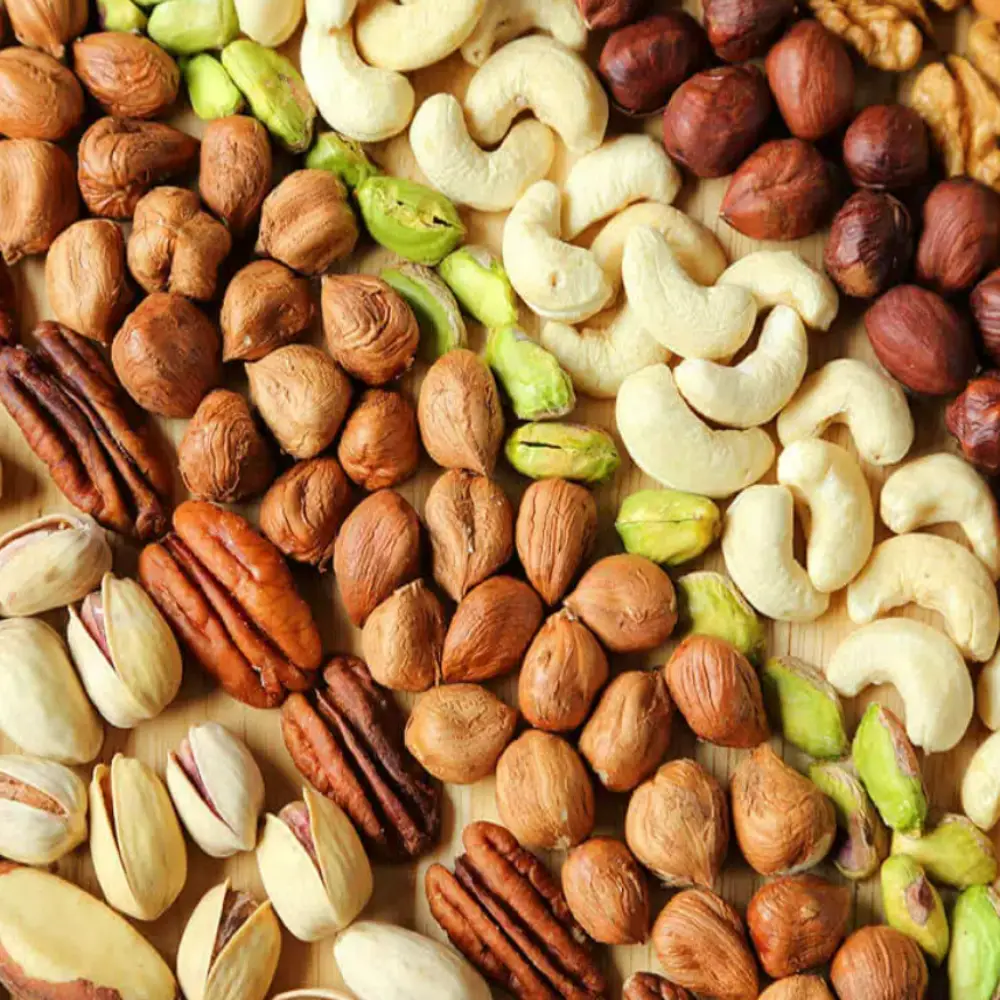
If you want to have better nutrition by adding iranian nuts to your diet, you may ask what is the most unhealthy nut? The short answer is that none of the nuts is bad in itself. A raw, unsalted almond or walnut is a nutritional nut, but can become a diet wrecker when it comes to the way that it is processed, salted, or packaged. But generally, many nutritionists say that macadamia nuts are one of the most unhealthy nuts as they are the highest in fat and calories. In this article, we’ll explore why some nuts have a bad reputation, the effect of processing on their nutritional content, and how you can eat nuts within a healthy, balanced diet.
The Myth of the “Bad” Nut
What is the most unhealthy nut, and why do we call them unhealthy? Nuts are rich in healthy monounsaturated fats, fiber, protein, vitamins, and minerals. They are associated with improved cardiovascular and weight control, as well as brain function. Why do some people say that they are unhealthy? It is typically one of three reasons: Calorie density, processing methods, or portion size.
1. The Calorie Density Problem:
Nuts contain lots of calories in a small amount. For instance, there are almost 900 calories in one cup of macadamia nuts. When you are trying to lose weight, it’s very easy to eat the entire day’s portion of calories just by eating a bowl of nuts.
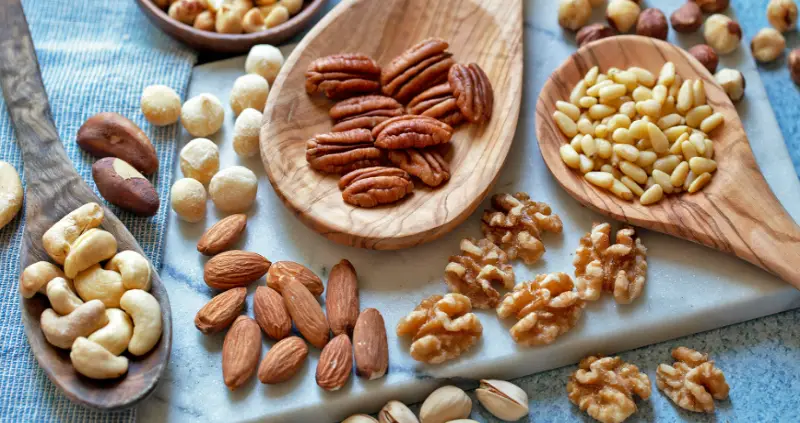
2. The Processing Trap
Not all nuts are the most unhealthy. What is the most unhealthy nut? Honey-roasted, candied, and chocolate-covered nuts are all made by adding:
- Refined Sugars: This transforms a healthy snack into a dessert and raises blood sugar.
- Vegetable Oils: Nuts are commonly deep fried or coated with inferior seed oils (such as soybean or cottonseed oil).
- Heavily salted nuts have hundreds of milligrams of sodium, a concern for anyone who’s keeping an eye on their blood pressure.
3. The Portion Size Reality
Though most health guidelines will recommend a serving of approximately 1 ounce (28 grams) or about a small handful. The thing is, no one eats one ounce. We eat from the bag, and three or four servings later, we’ve gained + 600 calories.
Which Nuts Should You Be Careful With?
After understanding what are the most unhealthiest nuts, remember that while all nuts can be part of a healthy diet, some people need more caution than others:
Macadamia Nuts
The macadamia nuts are one of the most unhealthy nuts as they are the highest in fat and calories. They have a fat content of about 75%. This is a nutritious monounsaturated fat, but there’s a huge amount of it compared to other nuts, such as pistachios or almonds, which are both high in the same type of fat. Macadamias are so easy to overeat.
Brazil Nuts
The Brazil nut is special. They are an amazing source of selenium, a trace mineral that protects the thyroid and immune system. But they are so selenium-rich that they can be poisonous if you eat too many of them. In fact, only 2-3 Brazil nuts will give you enough selenium for the day. The normal intake may result in selenium toxicity, leading to nausea, hair loss, and fatigue.
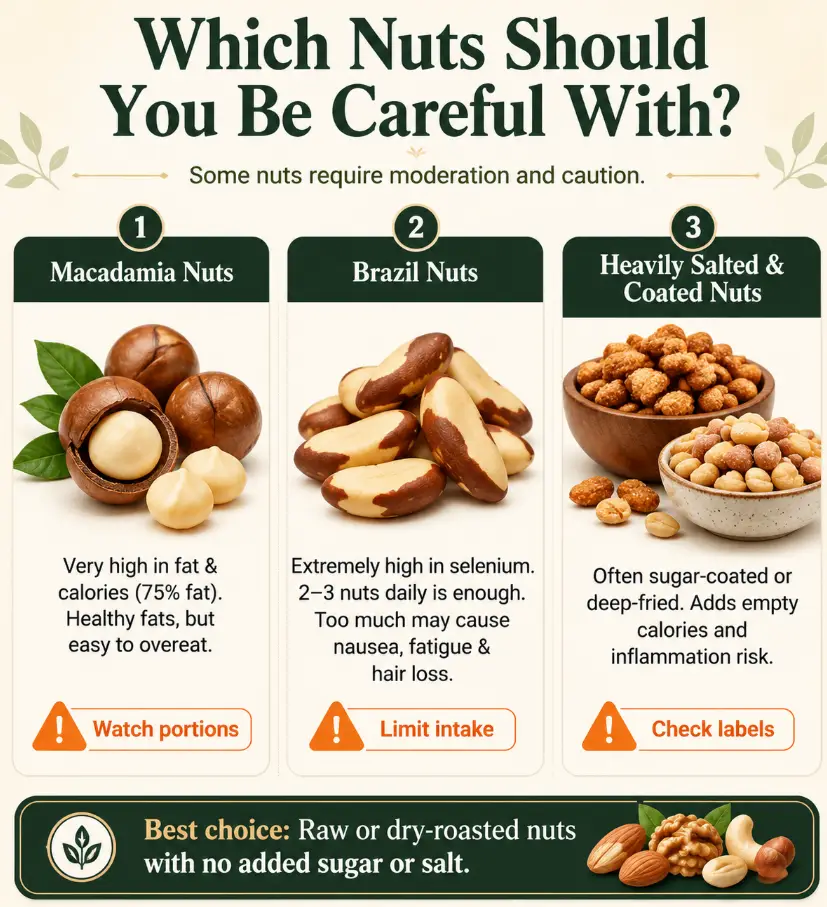
Heavily Salted and Coated Nuts
In fact, when you walk into a grocery store and pick up a bag of Honey-Roasted Peanuts, you are not purchasing those delicious nuts with protein, healthy fat, and valuable nutrients such as the iron content in peanuts; instead, you are buying a sugar-coated, deep-fried product. In reality, these nuts are the least healthy option available because they provide empty calories and may contribute to inflammation.
How to Make Nuts a Healthier Part of Your Diet
Now we know what is the most unhealthy nut, but don’t eliminate nuts from your diet. Here are some of our best recommendations:
- Always read the ingredient label:
Buy Raw or Dry-Roasted. So if the only thing in the ingredients is nuts (or nuts and salt), you need to worry about nothing. Stay away from nuts that include the words sugar, corn syrup, or hydrogenated oils.
- Bowl, Not a bag:
Do not eat nuts from a bag or container. Divide into a handful and place in a bowl. When the bowl is empty, you’re finished.
- Eat variety (not just one type).
Combine almonds, walnuts, pistachios, and cashews to obtain a broader range of antioxidants and minerals.
- Snack them with a fruit or cup of Greek yogurt:
Instead of eating nuts alone, snack them with a piece of fruit or a cup of Greek yogurt. This provides volume and fibre, which makes you feel full quicker and helps you not to eat more nuts than you need. also you can read which nuts are the healthiest.
Healthy Nuts You Can Add to Your Diet
Some nuts are especially popular for their health benefits. Here are a few healthy options:
- Almonds: High in vitamin E, fiber, and protein
- Walnuts: Rich in omega-3 fatty acids for heart and brain health
- Pistachios: Lower in calories and great for healthy snacking
- Cashews: Good source of magnesium and healthy fats
- Pecans: Contain antioxidants and heart-healthy nutrients
- Hazelnuts: Support heart health and provide vitamin E
- Peanuts: Affordable, high in protein, and very filling
Eating a small handful of mixed nuts each day can support overall health when combined with a balanced diet. Knowing how to keep nuts fresh is just as important as choosing healthy varieties, as proper storage helps preserve their flavor, texture, and nutritional value.
Nuts and Quality Snacks at Kourosh Foods
Kourosh Foods is committed to providing customers with nutritious and flavorful nuts and snacks while maintaining a balance between these two factors. The careful selection of nuts, roasting techniques, and controlled seasoning help to retain the benefits of nuts and bring great flavor. Choosing quality processing from reliable brands can make all the difference in the world in enjoying nuts as a part of a healthy lifestyle. Visit our website and place your order now.
FAQs
- What is the most unhealthy nut?
Nuts that contain fat or are roasted by oil such as macadamia nuts. - Are nuts unhealthy for weight loss?
No. Nuts can actually support weight loss when eaten in small portions because they contain protein, fiber, and healthy fats that help you feel full. - Which nut is the healthiest overall?
Many experts consider almonds and walnuts among the healthiest because they are rich in antioxidants, omega‑3 fats, and heart‑healthy nutrients. - How many nuts should you eat per day?
A good guideline is one small handful (about 28 grams or 1 ounce) per day, which provides health benefits without too many extra calories.