![How to Keep Nuts Fresh [ Can I Freeze Nuts ]](https://kouroshfoods.com/wp-content/uploads/2025/11/how-to-keep-nuts-fresh-1.webp)
Nuts can lose their fresh taste and crunchy texture if they are exposed to heat, air, or moisture for too long. The good news is that proper storage can help them stay fresh for much longer.
In this guide, we explain how to keep nuts fresh, where to store them, and whether the refrigerator or freezer is the better choice.
Can You Freeze Nuts?
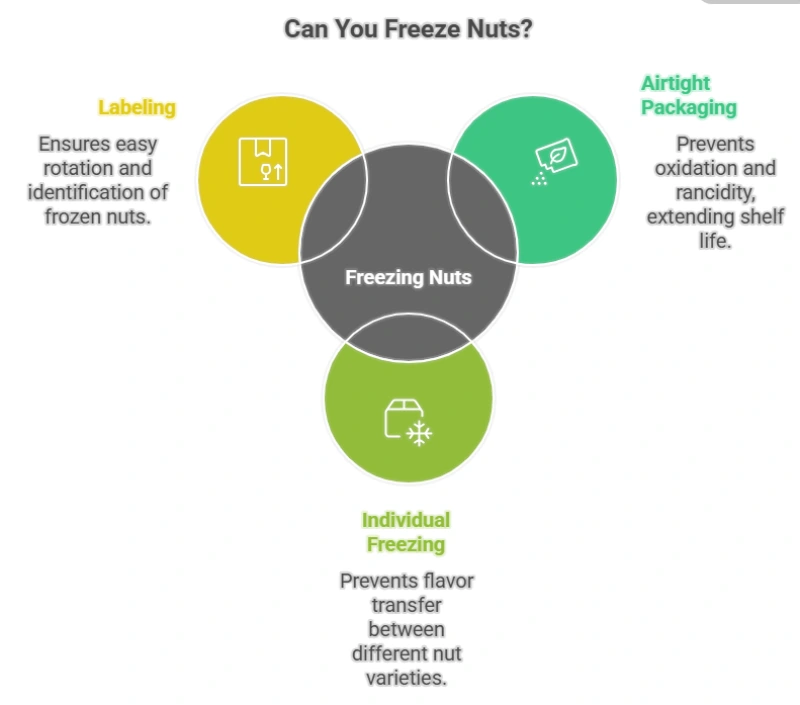
Yes, you can freeze most nuts, and it is one of the easiest ways to keep them fresh for longer. Freezing slows oxidation and helps protect their flavor and texture, especially when nuts are stored in airtight packaging.
- Package in freezer and odor-free (such as vacuum-sealer bags or canning jars).
- Freeze the nut varieties individually to prevent the transfer of flavours.
- Label containers by using the date so that they can be easily rotated.
To answer the question of can you freeze nuts and seeds, the advice provided by USDA and FDA, as well as the science of nutrition, promotes freezing as a safe process that does not affect the flavor, texture and nutritional value of products.
How Long Can You Keep Nuts in the Freezer?
It is a big question to know how long can you freeze nuts? Different nuts have slightly different freezer stability, but most keep for at least one year; some will last two years or more in proper storage:
| Nut Type | Freezer Life (approx.) |
| Almonds, Cashews | 2+ years |
| Walnuts, Pecans | 1–2+ years |
| Hazelnuts | 1–2 years |
| Mixed Nuts/Seeds | 1 year or longer |
| Pistachios | 1–2 years |
| Peanuts | 1–2 years |
| Nut Flours/Meals | 6–12 months |
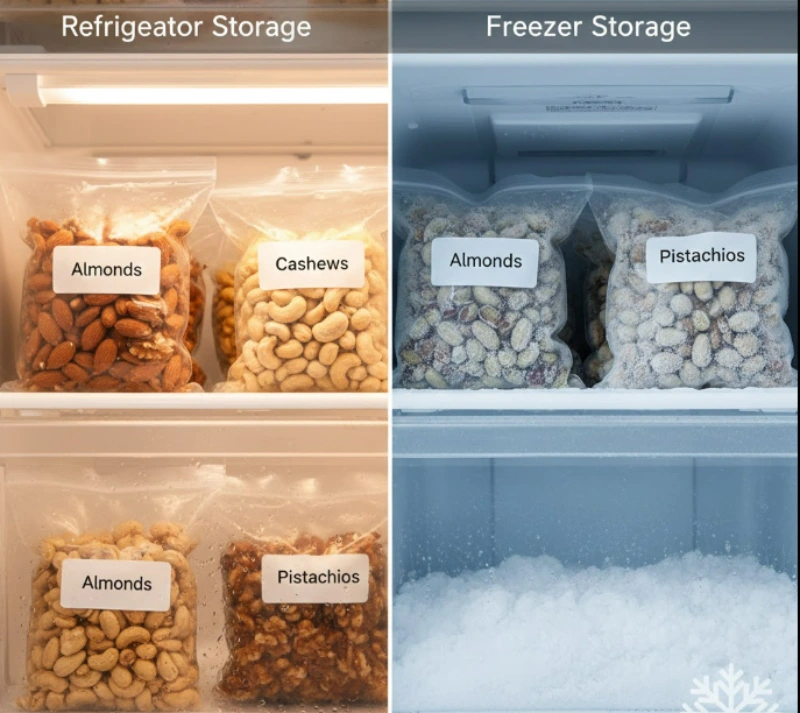
- Always return nuts to the freezer immediately after use and avoid repeated thawing to prevent condensation and moisture.
- Let nuts come to room temperature before opening the package after freezing, as this prevents condensation.
Pantry vs Refrigerator vs Freezer: Where Should You Store Nuts?
The best place to store nuts depends on how quickly you plan to use them. Room-temperature storage can work well for small quantities that are consumed regularly, while refrigeration helps keep nuts fresh for several months. For bulk purchases or long-term storage, the freezer is usually the better option because lower temperatures slow down oxidation and help preserve flavor and texture for longer.
| Storage Location | Typical Shelf Life | Best For |
|---|---|---|
| Room Temperature | A few weeks to a few months | Small quantities and frequent use |
| Refrigerator | About 6–12 months | Medium-term storage and regular snacking |
| Freezer | About 1–2 years or longer | Long-term storage, baking, and bulk purchases |
These periods are general estimates and can vary depending on the type of nut, packaging, and storage conditions. Airtight containers are recommended in all three cases to protect nuts from moisture, air, and strong odors.
Why Do Nuts Spoil?
Nuts are very delicate as they contain fat. The unsaturated oils (primarily nuts) are prone to oxidation, and when kept at room temperature, they may give off stale or rancid tastes. Moreover, nuts will pick up odors in their place of storage, and may become moist and thus develop mold. Rancidity is an oxidation and degradation product of fatty acids that is not only unpleasant to eat, but also harmful to health; so, storage is important. Delicate dried fruits such as iranian raisins show similar sensitivity, quickly losing their pleasant sweetness and chewy texture if exposed to excessive heat, light, or humidity during storage.
Keeping Nuts Fresh: The Best Tips
How to keep nuts fresh? Here are some tips:
- Keep It Cool
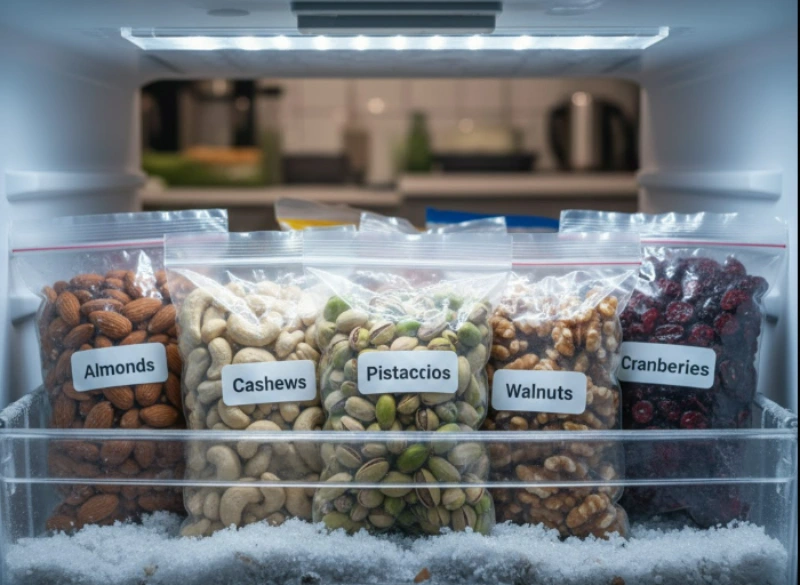
Keep nuts in a cool and dry dark environment to delay oxidation and spoilage. If you want long-term freshness, store them in refrigeration or a freezer, as recommended by nutritionists and government food safety organizations. For instance, keeping persian pistachios in the fridge or freezer inside sealed containers helps them stay crunchy, aromatic, and visually appealing for a much longer period.
- Use Airtight Containers
It is important to seal nuts properly. Oil quality and taste are preserved by airtight containers or vacuum-sealed bags, which block air and moisture. Glass jars, food-grade plastic, or special freezer bags are all good.
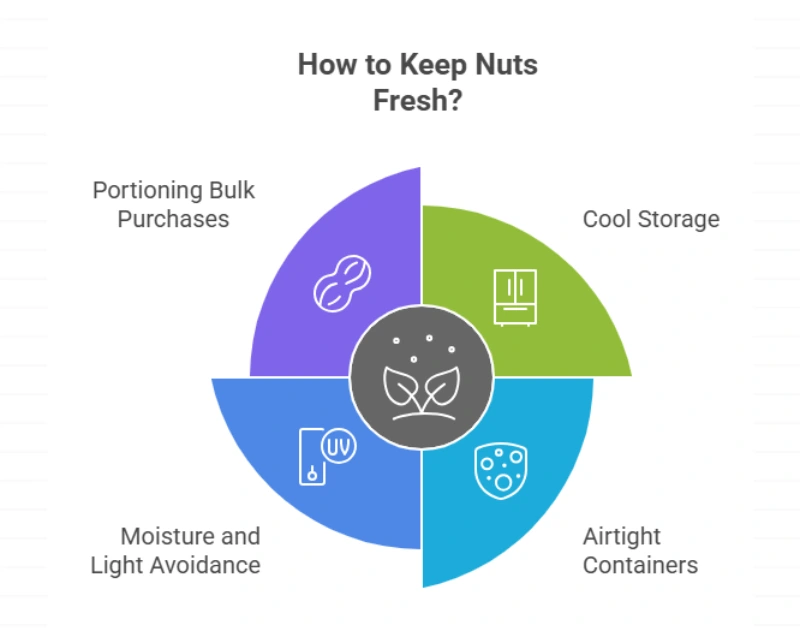
- Avoid Moisture and Light
Keep nuts in places that are not in direct sunlight or wet conditions, which accelerate the process of spoilage and growth of molds.
- Portion Bulk Purchases
When purchasing in bulk, you only need to keep a low amount at a normal temperature to use it instantly; put the rest in the fridge or freezer so that it is not exposed to air repeatedly.
Effects of Freezing on the Nut Quality
Can you freeze nuts to keep them fresh and without changing their quality? Freezing nuts helps to preserve their nutrients and flavor, and studies have indicated that there is no or minimal loss of quality with the passage of time.
The freezer preserves texture, crunch, and nutritional factors such as protein and healthy fats.
Read More: which nuts are the healthiest
Do Shelled or Unshelled Nuts Last Longer?
In general, unshelled nuts last longer than shelled ones because the shell acts as a natural barrier against air, light, and moisture. Once the shell is removed, the nut is more exposed to the conditions that can make it lose its freshness.
If you are buying nuts for long-term storage, keeping them in their shells can be a better choice. Shelled nuts are more convenient for everyday use, but they should be stored in an airtight container and kept in a cool place to maintain their flavor and texture for as long as possible.
Fresh Nuts in Kourosh Foods Company
Kourosh Foods is an Iranian food company that focuses on producing, supplying, and exporting a wide range of high-quality food products for both domestic and international markets. The company is best known for dried fruits, nuts, and related snacks. To order the fresh and high quality nuts, contact us now to place your order.
FAQs
1. Can you freeze nuts to keep them fresh?
Yes. Freezing is one of the best ways to keep nuts fresh for a long time. Store them in an airtight container or freezer-safe bag to protect them from moisture and odors.
2. Should you freeze nuts?
If you do not plan to use nuts within a few months, freezing is a good option. For everyday use, the refrigerator may be more convenient, while the freezer is better for long-term storage.
3. How long can you freeze nuts?
Most nuts can maintain good quality in the freezer for about 1 to 2 years when properly packed. The exact storage time depends on the type of nut and the packaging.
4. How to keep nuts fresh after opening?
After opening the package, transfer the nuts to an airtight container and keep them away from heat, light, and moisture. For longer storage, place them in the refrigerator or freezer.
5. How to store nuts?
Keep nuts in a sealed container in a cool, dry, and dark place. If you want to store them for several months, refrigeration or freezing is usually a better choice than keeping them in the pantry.
6. How to store nuts and seeds?
Nuts and seeds should be stored in airtight containers away from heat and moisture. They can be kept in the pantry for short-term use, while refrigeration or freezing helps extend their freshness.
7. Should nuts be stored in the fridge or pantry?
A cool pantry works well if you plan to use nuts within a short period. For longer storage, the refrigerator is usually better because cooler temperatures slow down oxidation and help nuts stay fresh.
8. How do you know if nuts have gone bad?
Nuts that have gone bad may develop an unpleasant or rancid smell, a bitter taste, or an unusual texture. Visible mold or discoloration is also a sign that they should not be eaten.