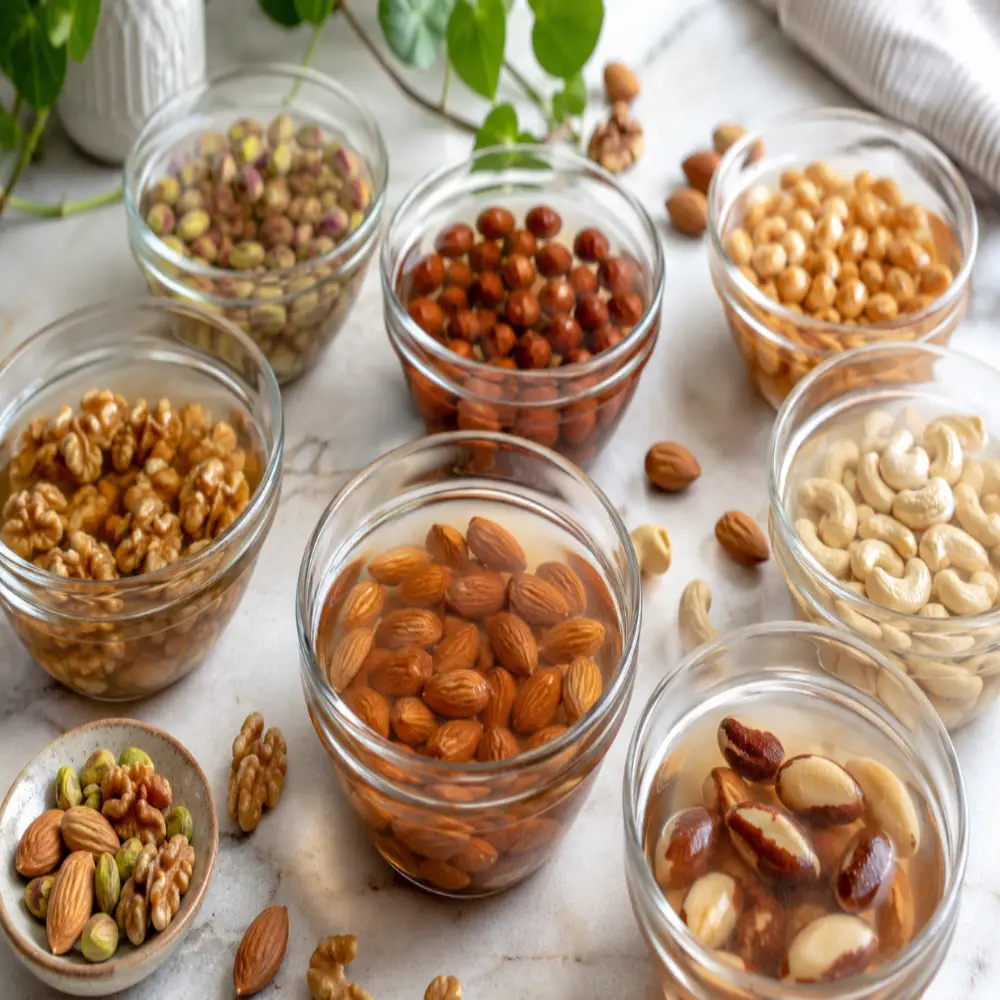
People usually soak raw nuts to soften them, remove some bitterness, make them easier to blend, or improve their personal digestive comfort. Although soaking may reduce some phytic acid, scientific studies do not show that it always improves mineral absorption.
Which nuts should be soaked? Almonds, walnuts, hazelnuts, pistachios, peanuts, and Brazil nuts can be soaked if you prefer a softer texture. Cashews should only be soaked for a short time. However, soaking nuts is optional; it is not necessary for everyone. In some cases, minerals may also move into the soaking water. In this article, we will find out more details.
What Nuts Should Be Soaked in Water?
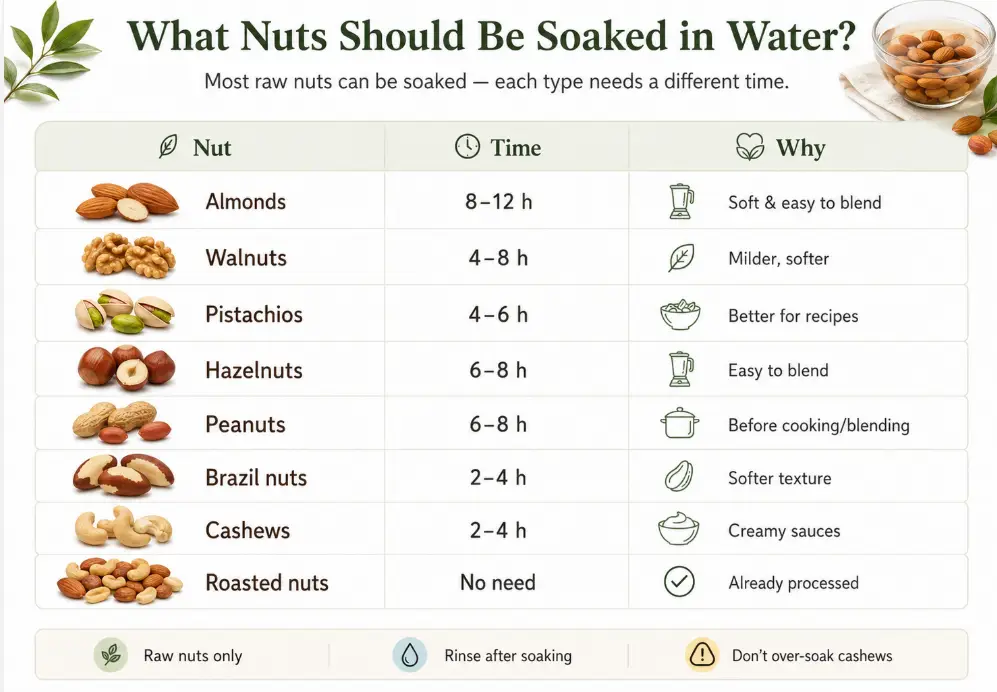
If you ask what nuts should be soaked, remember that most raw nuts can be soaked, but different nuts need different soaking times.
| Nut | Suggested Soaking Time | Main Reason for Soaking |
| Almonds | 8–12 hours | Softer texture and easier blending |
| Walnuts | 4–8 hours | Milder taste and softer texture |
| Pistachios | 4–6 hours | Softening for recipes |
| Hazelnuts | 6–8 hours | Easier blending and processing |
| Peanuts | 6–8 hours | Softening before cooking or blending |
| Brazil nuts | 2–4 hours | Slightly softer texture |
| Cashews | 2–4 hours | Creamy texture for sauces |
| Roasted nuts | Usually unnecessary | Already processed by heat |
Almonds
Raw almonds can be soaked overnight for about 8-12 hours. Once soaked, they are softer and can be incorporated in almond milk, smoothies, sauces, desserts, and nut butter. Almonds can be peeled after soaking, but it is not required. There’s no general need to remove the skin, as it contains fiber and plant compounds.
Walnuts
You can soak walnuts for 4-8 hours. They are a little bit bitter or dry; soaking them makes them softer. It can help make walnut sauces, spreads, desserts, and smoothies. Walnuts absorb water fairly readily and don’t require a 12-hour overnight soaking period.
Rinse them well after soaking. Walnuts are sensitive to oil and should be refrigerated after soaking because their high oil content makes them more susceptible to spoilage.
Cashews
If you still ask what nuts should be soaked in water, remember that cashews only require water for about 2–4 hours. They are easier to soften than other nuts like almonds and hazelnuts.
Cashews soaked in water can be ground into creamy soups, veggie-based sauces and dairy alternatives, or blended into dressings and desserts.
Avoid leaving cashews in water for too long. If the cashews are soaked for too long, they may get a slippery texture, the texture will change, and they may pick up an unwanted flavor.
Does Soaking Nuts Remove Pesticides? click for more info
Pistachios
Unsalted pistachio kernels can be soaked for about 4-6 hours. Soaking is primarily used when you want to make a softer pistachio for use in paste, cream, desserts, sauces, and blended recipes.
Hazelnuts
Which nuts should be soaked? Hazelnuts can be soaked for up to 6-8 hours. This makes them softer to incorporate into hazelnut milk, spreads, sauces and desserts.
Unless they are roasted with a soft texture in mind, do not soak roasted hazelnuts. They can be cooked in water, losing some of their roasted flavor and crunch.
Peanuts
Peanuts are a legume but are often included in the category of nuts for food recommendations and in nutrition plans. Raw peanuts can be soaked for 6-8 hours before being cooked, blended, or added to some traditional recipes. In general, peanuts are consumed dry without soaking, and many peanut snack products have been created.
Brazil Nuts
To soften, soak Brazil nuts in water for 2-4 hours. They are very textured, so it is normally not necessary to soak them for long periods.
read for more info: Pistachio Benefits for Brain: Memory, Focus & Mental Health
Why Do People Soak Raw Nuts?
After understanding which nuts should be soaked, let us know the reasons to soak them:
People soak raw nuts mostly to change their texture and taste. After soaking, nuts become softer, which makes them easier to blend into nut milk, butter, sauces, creams, and desserts. Some nuts, like walnuts and almonds, may also taste a little less bitter.
Another reason is that soaking can reduce some phytic acid, a natural compound found in nuts and other plant foods. According to USDA Food Data Central, Phytic acid can affect how the body absorbs certain minerals, but research shows soaking nuts does not always make a big difference. It may even lower some mineral content.
Some people also feel soaked nuts are easier to chew or digest, while others notice no change. In the end, soaking nuts is mostly a personal preference, not a health requirement.
Do You Really Need to Soak Nuts?
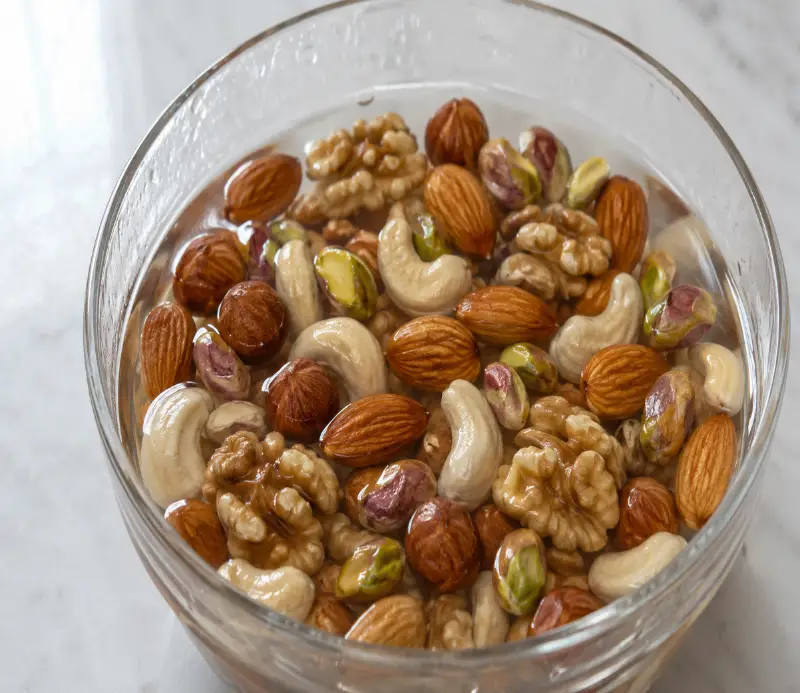
No. Most healthy people can safely eat raw or dry-roasted nuts without soaking. Soaking is mainly useful for changing texture, making nuts easier to blend into recipes, or for personal digestive preference rather than providing proven nutritional benefits.
How to Soak Nuts Safely
Place raw, unsalted nuts in a clean bowl and cover them with plenty of fresh drinking water. Use about two to three cups of water for each cup of nuts because they may expand.
For soaking periods longer than two hours, keep the bowl covered in the refrigerator. Food should not remain for extended periods at temperatures where bacteria can grow quickly.
After soaking:
- Drain and discard the soaking water. Wet nuts spoil much faster than dry nuts.
- Rinse the nuts under clean running water.
- Eat them soon or refrigerate them in a closed container.
- Dry them completely before long-term storage. After soaking, nuts can be dehydrated at low temperatures until fully dry to restore crunch for storage.
Should Roasted Nuts Be Soaked?
Roasted nuts usually should not be soaked. Heat has already changed their flavor, texture, and structure. Adding water removes their crunch and may weaken the roasted taste.
Choose raw nuts when soaking is part of a recipe. Choose dry-roasted nuts when you want a ready-to-eat snack with a crisp texture. Avoid products with excessive salt, damaged packaging, or a rancid smell.
Choosing Quality Nuts from Kourosh Foods
After knowing which nuts should be soaked, remember that the quality and freshness of nuts matter more than whether you soak them. Kourosh Foods Company’s nuts, dried fruits, legumes, and snacks are for local and international markets. Its product range includes Iranian nuts such as Persian pistachios, while its official company information lists food-quality and safety systems.
For retail, wholesale, or food-production needs, buyers can explore Kourosh Foods products and request information about available varieties, packaging formats, specifications, and supply options.
FAQs
- Which nuts should be soaked before eating?
You can soak almonds, walnuts, hazelnuts, pistachios, cashews, peanuts, and Brazil nuts.
- Should I soak nuts in salt water?
Some recipes recommend salted water for flavor or texture, but there is little scientific evidence that salt improves nutrient availability.
- Does soaking nuts improve nutrient absorption?
Not necessarily. Soaking may reduce some phytic acid, but studies on nuts have not consistently shown improved mineral availability.
- Can soaked nuts be frozen?
Yes, soaked nuts can be frozen. To freeze them, drain and rinse them well, pat them completely dry with a clean towel to prevent ice crystals, and freeze them in a single layer on a tray before transferring them to an airtight bag or container.