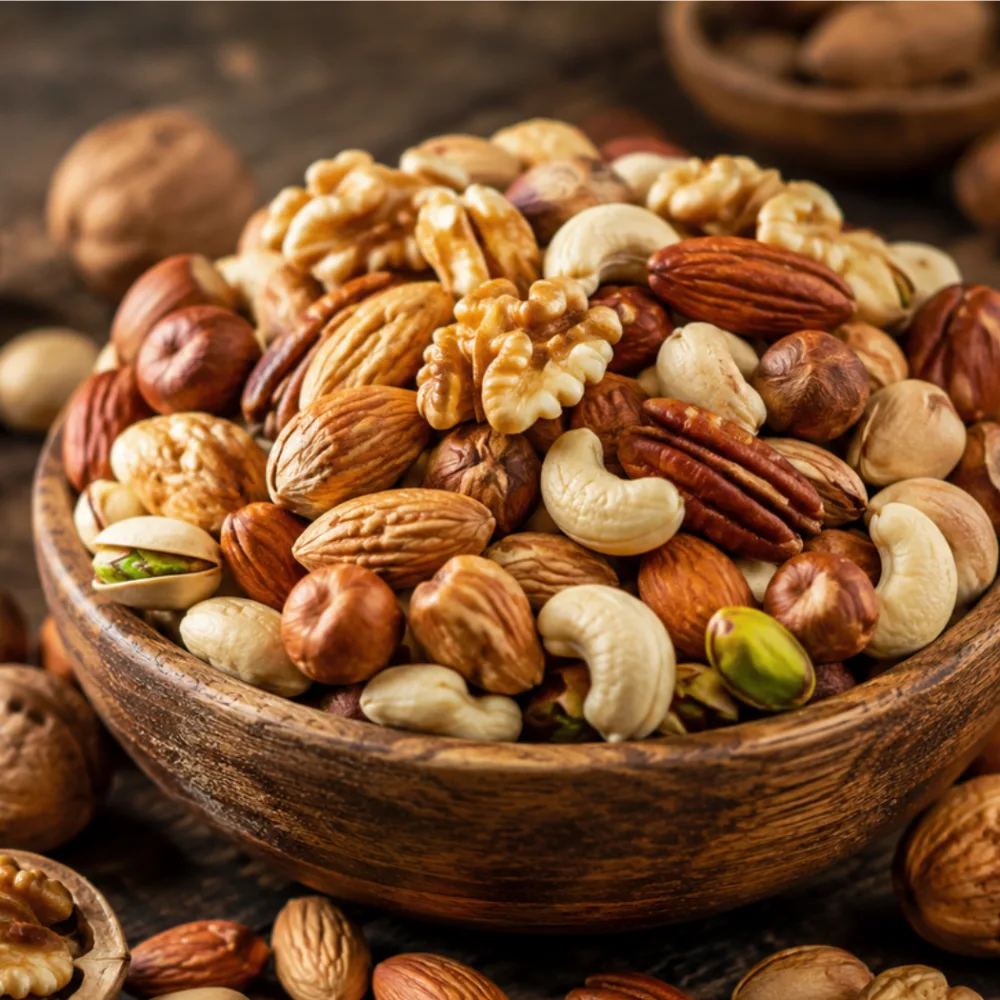
Do you enjoy eating nuts and want to know what are the benefits of eating nuts everyday? Eating nuts every day can support heart health, improve the quality of your diet, and provide nutrients that help with normal energy, muscle, and nerve function. Nuts are rich in unsaturated fats, plant-based protein, fiber, magnesium, vitamin E, and natural plant compounds such as polyphenols.
For many adults, about 28 grams, or one small handful, is a practical daily serving. Almonds, walnuts, pistachios, cashews, and hazelnuts are all good choices. The benefits of eating nuts are greatest when nuts replace less nutritious snacks rather than simply adding extra calories to your diet. Continue reading for more details.
What Happens If You Eat Nuts Daily?
Eating healthy nuts daily will not have an immediate effect for most people. The benefit lies not in the one-time addition of fibre, unsaturated fats, protein and useful micronutrients to the diet, but in a more regular addition.
Research is strongest in the areas of cholesterol and cardiovascular health. Moderate nut eating is not typically associated with weight gain, either. There is also some evidence relating to skin and reproductive health, but this is less extensive and should be interpreted with caution.
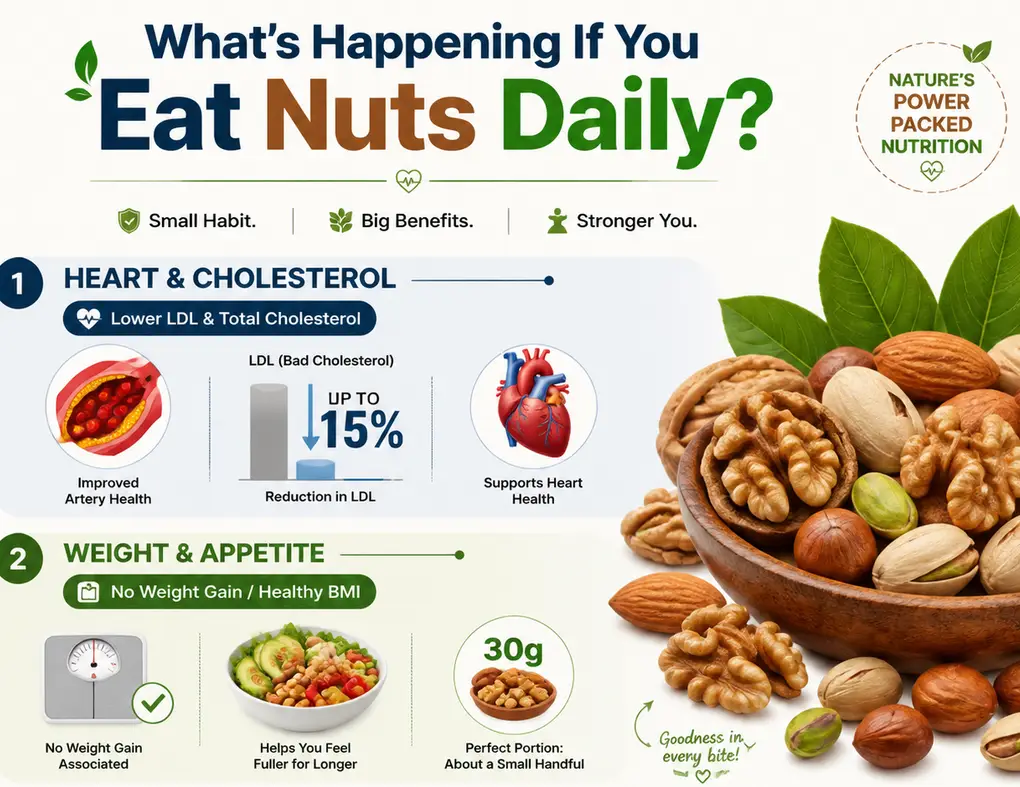
Heart and cholesterol
A 2025 meta-analysis of 113 randomized controlled trials with 8,060 adults about the benefits of eating nuts everyday was conducted and published in PubMed. The median nut consumption across the trials was 45.5 grams per day.
Moderate decrease in total and LDL cholesterol. Triglycerides and some other blood lipid measures declined less significantly.
These randomized trials are helpful because they demonstrate the effects of nut consumption on measurable markers of cardiovascular risk.
An analysis of 2026 prospective cohort studies reported that eating nuts was linked to reduced risk of cardiovascular events and mortality from any cause. These were observational studies and did not prove that the reduction in risk was due to nuts.
Weight and appetite
Though nuts are high in calories, they have not been proven to cause significant weight gain when eaten on a regular basis.
There is no significant difference in body weight, BMI, or waist circumference for diets including nuts or nut products was observed in one systematic review of 55 RCTs.
Nutritional Value of Nuts
The benefits of eating nuts everyday are due to the combination of nutrients found in a relatively small amount of food.
The majority of nuts are rich in unsaturated fats, protein, fibre, and various vitamins and minerals. Exact amounts will vary with the nut you use.
Vitamin E
Almonds and hazelnuts are good sources of vitamin E. The NIH Office of Dietary Supplements reports that 1 ounce of dry-roasted almonds contains approximately 6.8 mg of vitamin E and 1 ounce of dry-roasted hazelnuts contains approximately 4.3 mg of vitamin E. Vitamin E is an antioxidant in the human body.
Magnesium
Magnesium can also be added to the diet from nuts. Almonds and cashews are a great source of magnesium because a single ounce of dry roasted almonds contains approximately 80 mg, and cashews contain approximately 74 mg per ounce. Magnesium is involved in a myriad of normal processes within the body, such as muscle and nerve function.
Omega-3 fatty acids
Walnuts are one of the most popular nuts in the world and are known for their alpha-linolenic acid (ALA).
In 1 oz of English walnuts, there are approximately 2.57 grams of ALA. ALA is a plant-based omega-3 fatty acid; unlike EPA and DHA, which are found primarily in fish and seafood, it is not the same. These are limited conversion amounts that the body can use some of the ALA to make EPA and DHA.
read for more info: Soaking Nuts Benefits
Healthy Nuts to Eat Daily
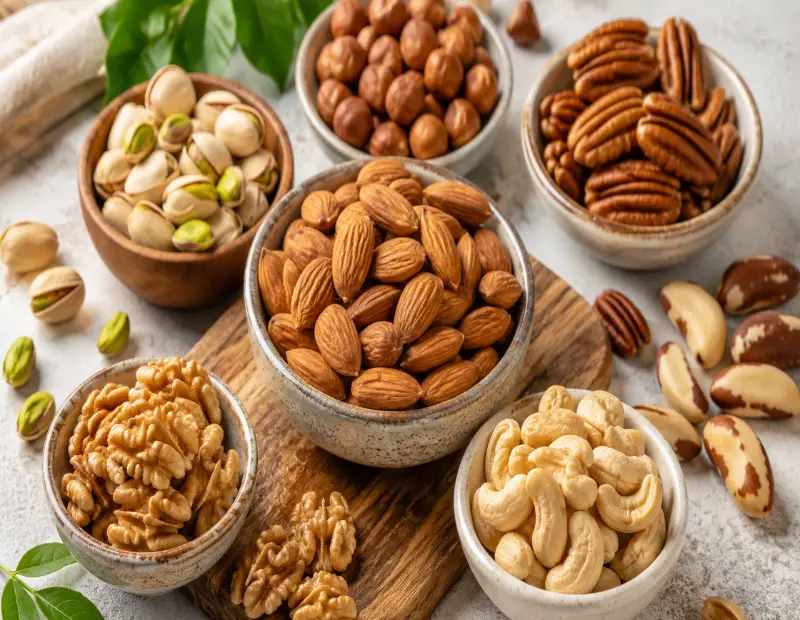
There is no single nut that is healthiest for everyone. The healthy nuts to eat daily are the ones that fit your diet, your calorie needs, and your preferences:
| Nut | Nutritional highlight | Practical use |
| Almonds | Vitamin E and magnesium | Snacks, yogurt, oatmeal |
| Walnuts | ALA omega-3 fatty acid | Breakfast, salads |
| Pistachios | Protein, fiber and unsaturated fats | Snacks |
| Cashews | Magnesium and unsaturated fats | Snacks, cooking |
| Hazelnuts | Vitamin E and monounsaturated fats | Breakfast, snacks |
| Pecans | Unsaturated fats and plant compounds | Snacks, oatmeal |
| Brazil nuts | Selenium | Small amounts |
If you want to know which Nuts With Less Calories are the best choice, read our related article to compare their calorie content and nutritional value.
Which Nuts Should You Choose?
If you want more vitamin E, almonds and hazelnuts are useful options. For magnesium, almonds and cashews stand out. Walnuts are a good choice when you want a plant source of ALA omega-3.
Pistachios are convenient for everyday snacking and provide a combination of protein, fiber, and fat.
You can also rotate several nuts during the week rather than eating the same type every day.
If you want to learn more about Pistachios for Eye Health, read our related article to discover how pistachios may support healthy vision.
A note on Brazil nuts
Brazil nuts contain much more selenium than most foods.
The NIH reports that a single Brazil nut can contain about 70 to 90 micrograms of selenium. The upper daily intake level for adults is 400 micrograms, so regularly eating a large handful can provide too much. A small amount is enough.

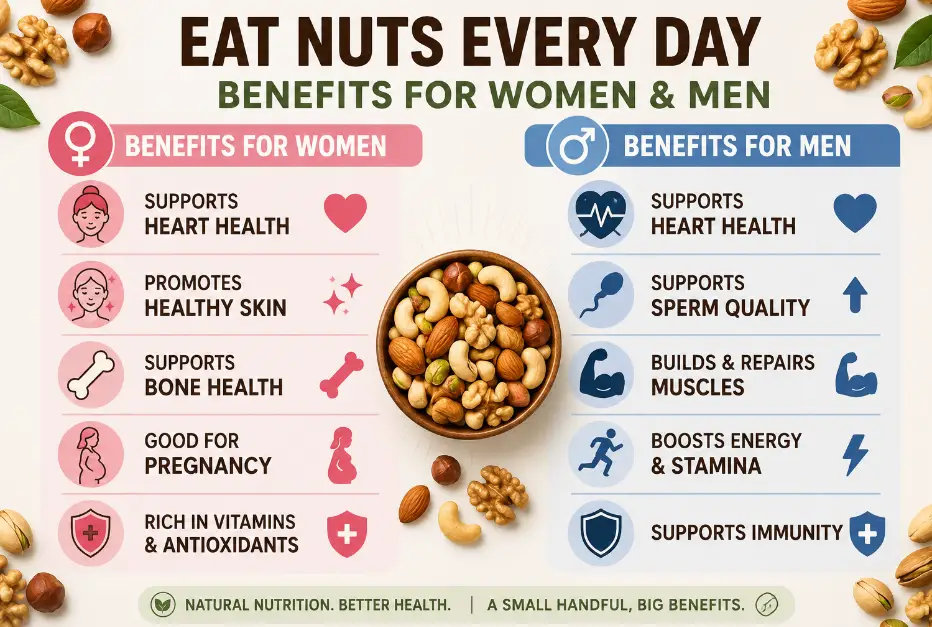
What Are the Nuts Benefits for Female Health?
The main nuts benefits for female health come from their basic nutritional value rather than a special effect that applies only to women.
Nuts provide unsaturated fats, plant-based protein, fiber, and several micronutrients. Almonds and hazelnuts can contribute vitamin E, while almonds and cashews are useful sources of magnesium. Walnuts provide ALA.
Nuts for women’s health
When choosing nuts for women’s health, variety is often more useful than looking for one specific nut.
For example, almonds can add vitamin E and magnesium to a snack, while walnuts provide ALA omega-3. Pistachios are easy to carry and can provide protein, fiber and unsaturated fat without much preparation.
Women’s nutritional needs can change with age, activity, pregnancy and breastfeeding. This means one fixed serving or nut combination will not suit everyone.
Pregnancy and breastfeeding
Nuts for women’s health can provide useful nutrients during pregnancy or breastfeeding when they fit the person’s diet, and there is no relevant allergy.
There is no need to choose a special “pregnancy nut” based on marketing claims. Women with food allergies, medical conditions, or specific dietary requirements should follow advice from their healthcare professional.
Mixed Nuts Benefits for Female Diets
The mixed nuts benefits for female diets are mainly practical.
A mix can provide several nutrient profiles in one serving. Almonds may contribute vitamin E and magnesium, walnuts provide ALA, and pistachios add protein, fiber and unsaturated fats.
There is no strong evidence that combining nuts creates a special biological effect that would not occur if those nuts were eaten separately.
A plain or lightly salted mix can also be easier to keep as a regular snack than buying several separate packages.
Want to know what is the most unhealthy nut? Read our guide to learn which nuts may be less healthy and what to consider when choosing them.
What Are the Nuts Benefits for Male Health?
The main nuts benefits for male health are similar to those for other adults. Nuts can contribute unsaturated fats, protein, fiber, vitamins, and minerals while supporting a heart-friendly dietary pattern.
Nuts and sperm quality
A 2024 systematic review examined research on nuts and fertility. Two randomized controlled trials involving 223 healthy men found that consuming at least 60 grams of nuts per day was associated with improvements in sperm motility, vitality, and morphology. Sperm concentration did not improve significantly. The amount is important.
Scientific context: the men in these trials consumed at least 60 grams of nuts per day. That is roughly twice the common one-ounce serving used for everyday snacking. The study amount should not be treated as a general recommendation for male fertility.
Better sperm measurements also do not prove that eating nuts will increase the chance of pregnancy or live birth.

Mixed Nuts Benefits for Male Diets
The mixed nuts benefits for male diets also come mainly from nutritional variety.
A simple mix of walnuts, almonds, and persian pistachios gives you several types of unsaturated fat along with protein, fiber, and minerals.
There is no need for a product marketed as a special “men’s nut blend.” Freshness, ingredients, serving size, and the amount of added salt are more useful things to check.
Benefits of Nuts for Skin
The benefits of nuts for skin are often exaggerated online. Human research exists, but it is much narrower than the evidence on cholesterol or cardiovascular health.
One randomized controlled study looked specifically at almonds in postmenopausal women with Fitzpatrick skin types I and II.
Women in the almond group consumed almonds providing 20% of their daily energy for 24 weeks. Researchers reported reductions in measured wrinkle severity and facial pigment intensity. They did not find significant improvements in skin hydration or transepidermal water loss.
How Many Nuts Should You Eat Per Day?
To use the benefits of eating nuts, around 28 grams (1 ounce) is a convenient amount for many adults. A serving of whole nuts is a small handful or one ounce, according to the American Heart Association.
The correct amount is different depending upon calorie requirements, activity and diet. It’s easier to manage how much nut you eat if you do it in a small bowl rather than a large package if you are on a calorie diet.
Can You Eat Nuts Every Day Without Gaining Weight?
Yes, randomized controlled trials in general have not shown any significant adverse effect of nut consumption on body weight. Pay attention to the amount of nuts.
Raw Nuts vs Roasted Nuts: Which is Better?
There is no rule to say that raw nuts are always healthier. You change the nature, taste, and certain chemical constituents of nuts by roasting. The outcome varies according to the nut type, roast temperature, and how it is roasted.
In a 2025 walnut, hazelnut, and peanut study, roasting resulted in significant alterations of fatty acids, polyphenols, and antioxidant measures under varying roasting conditions.
| Raw nuts | Roasted nuts |
| No roasting step | More developed flavor and crunch |
| Often sold plain | Can also be sold without added oil |
| Nutrients are not exposed to roasting heat | Heat can change some fatty acids and plant compounds |
| Good for snacks and recipes | Good for snacks and recipes |
| Still needs portion control. | Still needs portion control. |
Who Should Be Careful With Nuts?
To use benefits of eating nuts everyday, while most healthy adults can eat nuts, there are some exceptions.
Nut allergies
Peanuts and tree nuts are significant food allergens in the U.S. The symptoms of a food allergic reaction can be mild or severe, and anaphylaxis is serious. The FDA urges people who have a known food allergy to take time to read labels and steer clear of foods that cause allergic reactions.
Medical diets
Individual dietary recommendations are needed for people who have kidney disease or another condition that needs mineral, calorie, or nutrient control.
Brazil nuts
It’s not recommended to consume large amounts of Brazil nuts daily due to their high selenium levels. One or two can give a considerable amount of selenium.
Salty and sweet coatings
Salted nuts are a high source of sodium. Other sweet nut products like honey-roasted, chocolate-covered, and other sweeteners can also be high in added sugar.
Should You Eat Nuts Every Day?
Yes, to use the benefits of eating nuts everyday. A reasonable serving can provide unsaturated fats, fiber, plant-based protein, magnesium, vitamin E, and other nutrients. Modest benefits of nut consumption on blood lipids have been found in studies; observational studies associate higher nut consumption with improved long-term cardiovascular benefits.
There’s no need to consume all of the different kinds of nuts and to follow a complex regimen. Select some nuts that you like, serve them in moderation, and replace less nutritious foods with nuts when appropriate.
For pricing inquiries and to purchase Iranian dried fruits and nuts, contact us.
Choosing Nuts from Kourosh Foods Company
For buyers who are interested in iranian nuts, Kourosh Foods lists several varieties, including Akbari, Ahmad Aghaei, Kalle-ghouchi, Round Fandoghi, Green Peeled Pistachio Kernel, and Red Pistachio Kernel. Other product ranges include peanuts, dried fruits, dates, raisins, seeds, and other food products. Visit our website and place your order.
FAQs
- What are the benefits of eating nuts every day?
Eating nuts daily can support heart health and add healthy fats, protein, fiber, vitamins and minerals to your diet.
- Which nuts are healthiest to eat daily?
Almonds, walnuts, pistachios, cashews and hazelnuts are all good choices. Eating a mix gives you more variety.
- What are the nuts benefits for female health?
Nuts can provide women with healthy fats, magnesium, vitamin E, fiber and plant-based protein as part of a balanced diet.
- What are the nuts benefits for male health?
Nuts support general heart and nutritional health in men. Some studies also suggest possible benefits for certain sperm-quality measures.
- How many nuts should I eat daily?
For many adults, about 28 to 30 grams, or one small handful, is a practical daily serving.