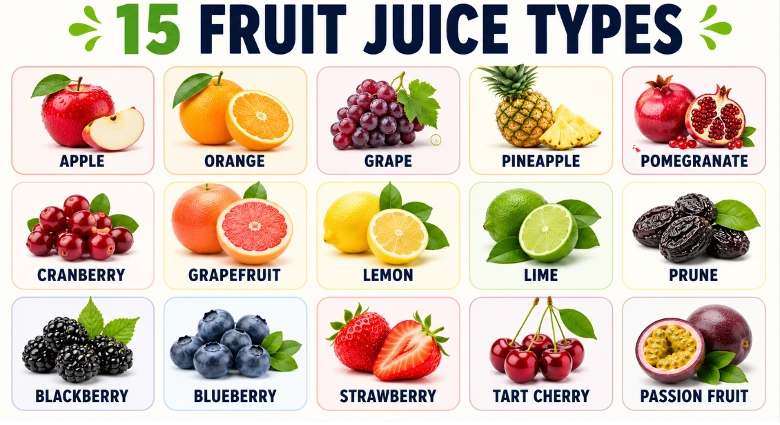
There are many types of fruit juice, but apple, orange, grape, pineapple, pomegranate, cranberry, grapefruit, lemon, and cherry are among the most familiar varieties. Each has a different flavor and nutritional profile, so there is no single “best” juice for everyone.
This guide compares 15 popular fruit juice types, including their flavor, calories, natural sugars, key nutrients, and potential benefits. You will also find the main differences between fresh juice, NFC juice, juice from concentrate, nectar, and other common types of fruit drinks.
Fruit Juice Types List: 15 Popular Varieties at a Glance
Here is a short look at the juice types list
| Fruit Juice | Flavor | Approx. Calories per Cup* | Notable Nutrients / Compounds |
| Apple juice | Mild, sweet | 119 kcal | Potassium, manganese |
| Orange juice | Sweet, citrusy | 112 kcal | Vitamin C, folate, potassium |
| Grape juice | Rich, sweet | 152 kcal | Manganese, potassium, polyphenols |
| Pineapple juice | Sweet, slightly tart | 132 kcal | Manganese, vitamin C, vitamin B6 |
| Pomegranate juice | Sweet-tart | 134 kcal | Potassium, vitamin K, polyphenols |
| Cranberry juice | Sharp, tart | About 79 kcal | Vitamin C, vitamin E, vitamin K, anthocyanins |
| Grapefruit juice | Tart, slightly bitter | 97 kcal | Vitamin C, potassium, flavonoids |
| Lemon juice | Strongly sour | 54 kcal | Vitamin C, folate |
| Lime juice | Sour, aromatic | 61 kcal | Vitamin C, folate |
| Prune juice | Rich, sweet | 182 kcal | Potassium, iron, vitamin B6 |
| Blackberry juice | Sweet-tart | 94 kcal | Vitamin C, vitamin K, copper |
| Blueberry juice | Mildly sweet, tart | 92 kcal | Vitamin K, vitamin C, anthocyanins |
| Strawberry juice | Mildly sweet | 91 kcal | Vitamin C, vitamin K, copper |
| Tart cherry juice | Tart-sweet | 159 kcal | Potassium, copper, thiamin, polyphenols |
| Passion fruit juice | Tart, tropical | About 148 kcal | Vitamin C, potassium, carotenoids |
Values are amounts for one cup of unsweetened or 100% juice where USDA data are available. Exact values vary with the fruit variety, serving weight, processing method, fortification and product formulation.
Different Types of Juices and Their Benefits
Different types of juices and their benefits include:
1. Apple Juice
Apple juice has a mild, sweet taste and is one of the most common fruit juices. One cup has about 119 calories and 25 g of sugar, along with some potassium and manganese. Since most of the pulp is removed during juicing, it has less fiber than a whole apple.
2. Orange Juice
Orange juice is best known for its vitamin C. One cup provides about 112 calories, 124 mg of vitamin C, 74 mcg of folate and 496 mg of potassium. Vitamin C supports normal immune function and also helps the body absorb iron from plant foods. Like most juices, orange juice contains much less fiber than the whole fruit.
3. Grape Juice
Grape juice has a rich, sweet flavor. A cup contains about 152 calories and 36 g of natural sugar, as well as manganese and potassium. Dark grape juice also contains polyphenols naturally found in grapes. The exact amount is different depending on the grape variety and how the juice is processed.
4. Pineapple Juice
Pineapple juice has a sweet taste with a slightly sharp finish. One cup of this juice variety provides about 132 calories and 25 g of sugar and is a good source of manganese and vitamin C. These nutrients support normal body functions such as metabolism, collagen production and antioxidant protection.
5. Pomegranate Juice
Pomegranate juice has a deep red color and a sweet-tart taste. One cup provides about 134 calories, 31 g of sugar, and more than 500 mg of potassium. It also contains vitamin K and naturally occurring polyphenols, which are widely studied for their antioxidant properties.
6. Cranberry Juice
Pure cranberry juice has a strong, tart flavor and tastes very different from sweetened cranberry drinks. Unsweetened versions can provide vitamins C, E and K, along with plant compounds such as anthocyanins.
7. Grapefruit Juice
Grapefruit juice has a fresh citrus taste with a slightly bitter edge. One cup of this juice variety provides around 97 calories and contains vitamin C and potassium. One thing to keep in mind is that grapefruit juice can interact with some medicines.
8. Lemon Juice
Lemon juice is much more sour and less sweet than most fruit juice types. One cup contains around 54 calories and 6 g of sugar and provides a good amount of vitamin C.
9. Lime Juice
Lime juice has a sharp, fresh citrus flavor. A cup provides about 61 calories and 4 g of sugar, along with vitamin C and smaller amounts of folate and potassium. Like lemon juice, it is usually consumed in small amounts rather than by the cup.
10. Prune Juice
Prune juice is made from dried plums and has a rich, naturally sweet taste. One cup contains about 182 calories, 42 g of sugar and 707 mg of potassium. It also provides vitamin B6, iron and manganese and can contain a small amount of fiber.
11. Blackberry Juice
Blackberry juice has a dark color and a slightly sweet, slightly tart flavor. One cup provides around 94 calories and contains vitamin C, vitamin K, copper, magnesium and potassium. Blackberries also naturally contain anthocyanins, the plant pigments responsible for their dark color.
12. Blueberry Juice
Blueberry juice has a mild, sweet-tart taste and a deep purple-blue color. One cup provides about 92 calories and can supply vitamin K, vitamin C and copper. It also contains anthocyanins, although the amount can change depending on the fruit and processing method.
13. Strawberry Juice
Strawberry juice is less common in juice types of juice flavors than apple or orange but has a light, fruity flavor. One cup of 100% strawberry juice provides around 91 calories. It also contains vitamin C, vitamin K and copper, with smaller amounts of magnesium, potassium and folate.
14. Tart Cherry Juice
Tart cherry juice is made from sour cherries and has a sharper taste than regular sweet cherry juice. One cup provides around 159 calories and contains potassium, copper, thiamin and naturally occurring polyphenols.
15. Passion Fruit Juice
Passion fruit juice has a strong tropical aroma and a tart, fruity taste. One cup provides roughly 145–150 calories, depending on the serving weight and product. It also contains vitamin C and potassium. Nutrition values can vary if the juice is diluted, sweetened or blended with other fruit juices.
Types of Fruit Juice by Processing Method
By considering processing method, types of fruit juice are:
Freshly Squeezed Juice
Fresh juice is made directly from fruit without a concentration step. Its taste and nutrients can change with storage and processing.
Not-From-Concentrate (NFC) Juice
NFC juice is not concentrated and then diluted again. It can be pasteurized or chilled before packaging.
Juice From Concentrate
This juice is made by removing some water, then adding water back before it is sold. Concentrating juice also makes storage and transport easier.
Concentrated Fruit Juice
Fruit juice concentrate, among other types of fruit juice, has much of its water removed and is commonly used as an ingredient by food and beverage manufacturers.
Blended Fruit Juice
Blended juice combines two or more juices, such as apple-grape or tropical fruit blends, to create different flavors.
Comparing All Types of Fruit Juice
All types of juice offers different properties. Here is a detailed explanation:
-
Nutritional Content
The nutritional value of fruit juices is an important consideration when comparing them. The maximum concentration of vitamins, minerals, and antioxidants may usually be found in fresh juices. Juices that have been concentrated and reconstituted may still contain vital elements, but their nutritional value may have decreased significantly as a result of processing. Because blended and mixed fruit juices include the components of several fruits, they can provide a wider variety of nutrients. Based on your dietary requirements, knowing the nutritional profile of each juice variety will help you make wise decisions.
-
Flavor Profiles
Another important component of fruit juices is flavor. While blended and mixed fruit juices offer more nuanced flavor profiles that can be both interesting and fulfilling, single-fruit juices deliver a straightforward sense of the fruit’s natural flavor. Specialty juices frequently have distinctive blends that satisfy particular dietary requirements or palate preferences. You can enjoy a more diversified juice experience and find the flavors that best fit your palette by experimenting with different juice selections.
Consumption and Storage of Fruit Juice
All types of fruit juice need to be stored in a proper place. Fruit juices must be consumed and stored properly to preserve their nutritional value and purity. Fresh juices should be drunk right away to fully enjoy their flavor and nutritional value. Although concentrated and reconstituted juices provide more storage options, airtight containers are still required to maintain freshness. Certain storage conditions, including refrigeration, may be necessary for mixed and specialized juices to keep them fresh and safe to consume.
Fruit juices come in single, mixed, vegetable, and specialty varieties, each with unique flavor and health benefits. Comparing and storing them is crucial for understanding their nutritional value.

Types of Juice Concentrate for Beverage Manufacturers
For beverage manufacturers, choosing a juice concentrate is not only about flavor. Brix, acidity, color, aroma, application, packaging, storage conditions and reconstitution requirements can all affect the final product.
Kourosh Foods lists several Iranian fruit concentrates for wholesale supply, including apple, grape, red grape, sour cherry, pomegranate, peach and plum concentrate. The company’s published specifications mentions that Brix differs by fruit; for example, its product information lists apple concentrate at around 70° Brix and several other juice concentrates around 65° Brix.
Manufacturers should request the technical specification for the specific batch or product rather than assuming that one Brix, acidity or formulation applies to every concentrate.
Conclusion
Fruit juices are available in different forms and variations, each with unique tastes and health advantages. All type of juice can fit every taste and dietary requirement, from the unadulterated flavor of fresh juices to the versatility of blends and the ease of concentrates. You can make more informed decisions that complement your taste preferences and health objectives by being aware of the distinctions between these possibilities. Without question, fruit juices may be a tasty and healthy supplement to your diet, whether you choose single fruit juices, blended mixes, or specialty selections. You can contact us through the kouroshfoods website to prepare and order all kinds of Juice concentrate .

Kourosh Foods Company, the Provider of Fruit Juice
Kourosh Foods Company is a provider of fruit juice concentrates and fruit puree concentrates that offers a wide variety of premium products. The company is devoted to perfection and makes certain that every product is made with the freshest ingredients possible, maintaining the fruit’s natural aromas and nutritional value. The products are delivered to customers as soon as possible with the best shipping method. Call us today to place your order.
FAQs
What are the most common types of fruit juice?
Orange, apple, grape, pineapple and cranberry juice are among the most widely recognized commercial varieties.
What is the difference between juice and nectar?
Fruit juice can be obtained directly from fruit or made by reconstituting fruit juice concentrate. Fruit nectar is made from fruit juice and/or purée with water, and its required fruit content depends on the fruit and the applicable food standard.
What is NFC juice?
NFC means not from concentrate. The juice has not first had substantial water removed and then had water added back before sale.
How many types of fruit juice are there?
There is no fixed number. Juice can be made from many fruits, although apple, orange, grape, pineapple, cranberry and pomegranate are among the most common varieties.
What is juice from concentrate?
Juice from concentrate is made by removing part of the water from fruit juice and adding water back before the finished juice is packaged.