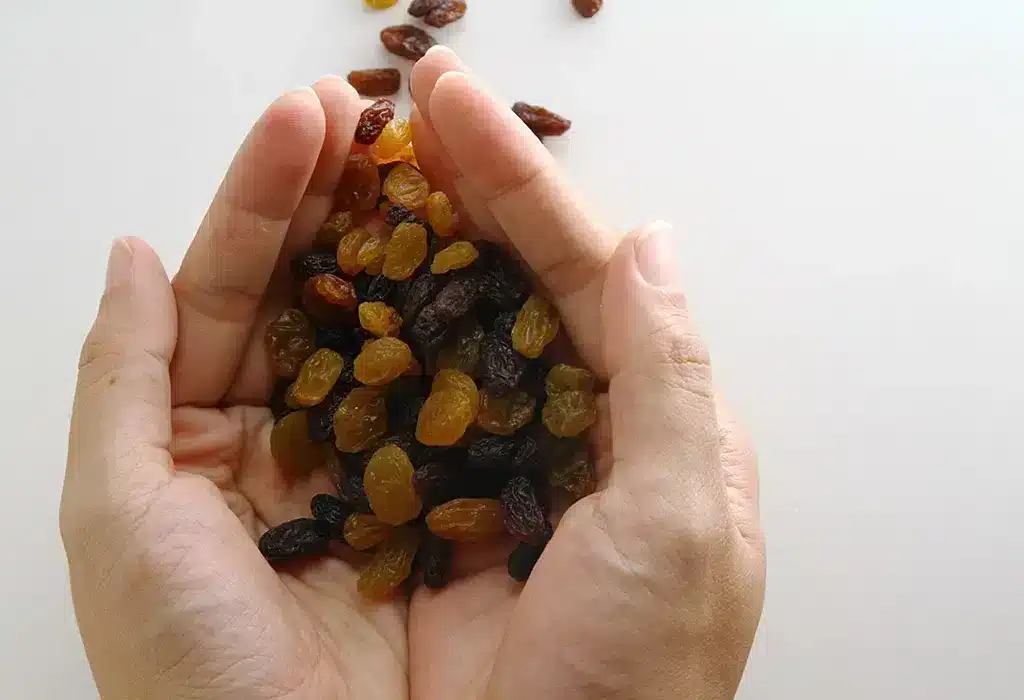
Yes, eating raisins in pregnancy is a part of a balanced diet. Raisins, also known as dried grapes or kishmish, provide carbohydrates, some fiber, potassium and small amounts of iron and other minerals. However, they are also concentrated in natural sugar, so portion size matters.
A serving of around 30 g is a useful reference for dried fruit. Eating raisins during pregnancy should not replace fresh fruit, prenatal vitamins or prescribed iron and folic acid supplements. ACOG explicitly includes dried fruit among acceptable fruit choices during pregnancy, while NHS uses around 30 g as one adult dried-fruit portion. Continue reading for more details.
Are Raisins Safe During Pregnancy?
Raisins are generally safe during pregnancy when they are eaten as part of a varied diet. ACOG includes dried fruit as one of the forms of fruit that can be eaten during pregnancy.
The main point to watch is portion size. Drying removes much of the water from grapes, so the natural sugars and calories are concentrated into a much smaller amount of food. Choose properly stored raisins and check packaged products for added ingredients when necessary.
The combination of dates and milk can offer numerous health benefits, including boosting the immune system and increasing energy. For more information about dates and milk health benefits, you can refer to the article

Raisin Nutrition During Pregnancy
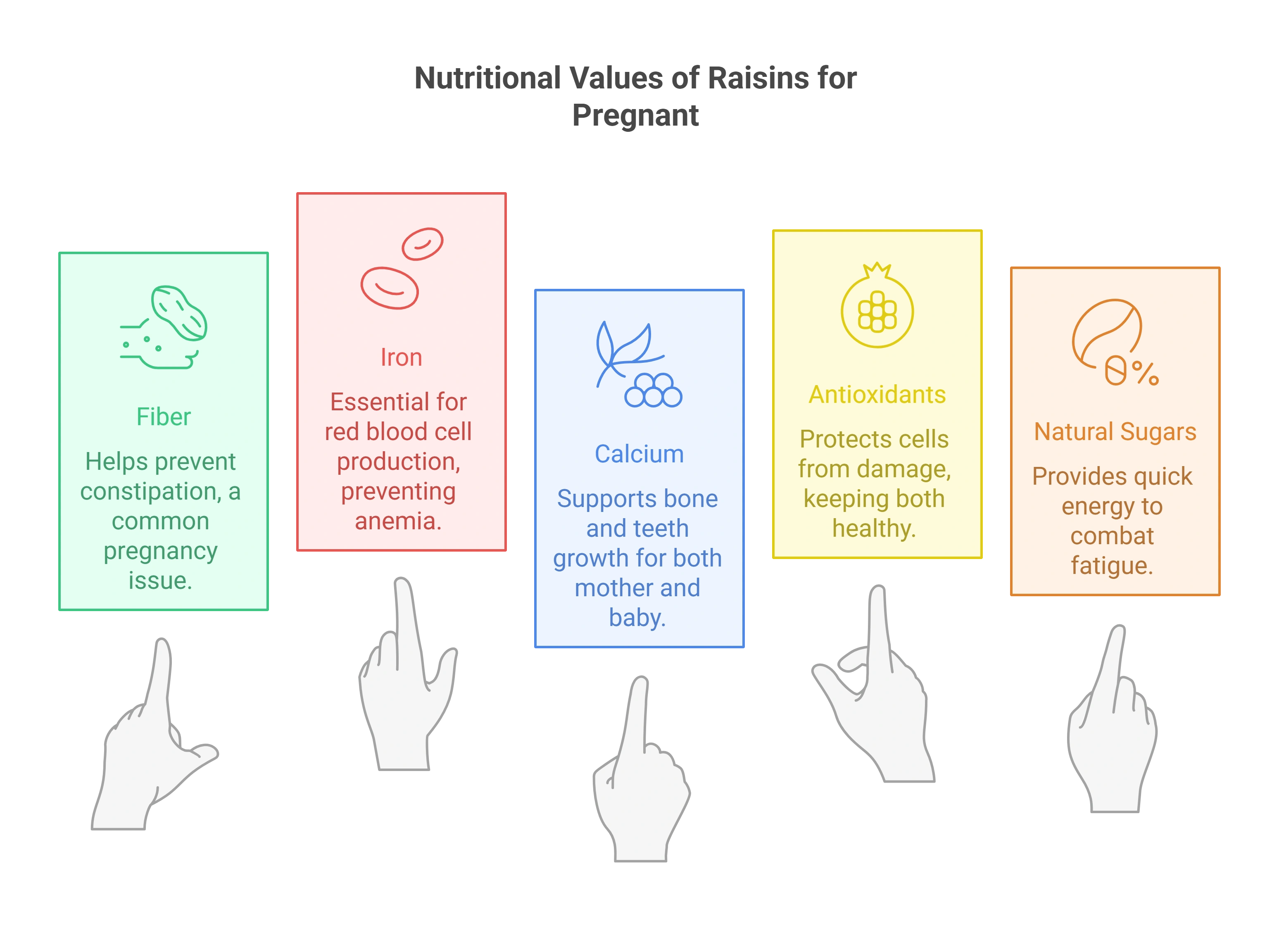
Raisins or kishmish in pregnancy provide mostly carbohydrates and natural sugars, with smaller amounts of fiber, potassium, iron and magnesium. The table below shows approximate values for a 30 g serving of seedless raisins.
| Nutrient | About 30 g Raisins |
|---|---|
| Calories | 90 kcal |
| Carbohydrate | 23.8 g |
| Natural sugars | 17.8 g |
| Fiber | 1.1 g |
| Protein | 0.9 g |
| Potassium | 225 mg |
| Iron | 0.56 mg |
| Calcium | 15 mg |
| Magnesium | 9.6 mg |
| Vitamin C | 0.7 mg |
| Folate | 1.5 mcg |
Pregnant women need about 27 mg of iron per day, so a 30 g serving of raisins supplies only a small part of that amount. The same applies to folate: raisins contain very little and cannot replace a prenatal folic acid supplement.
How Many Raisins Can You Eat During Pregnancy?
There is no single pregnancy-specific limit for raisins that applies to everyone. As a practical reference, the NHS considers around 30 g of dried fruit one adult fruit portion.
That amount of raisins contains 18 g of natural sugar, so larger portions can add carbohydrates quickly. You do not have to eat raisins every day, and they are best included alongside a variety of fresh and dried fruits rather than used as your main fruit source.
Go to the website to learn about different types of raisins such as Organic Sultana Raisins .
Black Raisins During Pregnancy
Are black raisins good for pregnancy? You can eat black raisins during pregnancy in the same way as other raisins. They are dried dark-colored grapes and provide carbohydrates, natural sugars, and small amounts of fiber and minerals. Choose the variety you enjoy and keep portion size in mind.
Ways to Add Raisins to the Pregnancy Diet
Explore these simple and versatile ideas to add raisins to your diet: snack on them, mix them into breakfast dishes, blend raisins into smoothies, include them in baked goods, pair them with nuts, mix raisins into salads, and cook with savory dishes. Raisins are good for pregnancy, but remember to enjoy them in moderation and consult with a healthcare professional for personalized advice pregnancy.

Potential Benefits of Raisins During Pregnancy
Dry grapes during pregnancy have some benefits:
They Add Some Fiber
Raisins provide a small amount of dietary fiber. A 30 g serving contains about 1.1 g, so they can contribute to overall fiber intake.
Constipation is common during pregnancy, and ACOG recommends getting about 25 g of fiber a day from a variety of foods such as fruit, vegetables, beans and whole grains.
Raisins For Health
They Provide Potassium and Some Minerals
To benefit from black raisins in pregnancy, a 30 g serving provides around 225 mg of potassium, along with smaller amounts of iron and magnesium. These nutrients all have roles in normal body function, but raisins should be viewed as one small part of a varied pregnancy diet rather than a concentrated source of pregnancy nutrients.
They Are a Convenient Source of Carbohydrate
Raisins are naturally rich in carbohydrate because grapes become more concentrated as they dry. This makes them an easy, portable snack, but it also means that a small portion contains a relatively large amount of natural sugar.

Considerations for using raisins
It is important to consume raisins in pregnancy moderation. Every woman’s nutritional needs during pregnancy are different from others, so consult your doctor or a nutritionist for personalized guidance according to your situation. Watch your sugar intake as raisins in pregnancy are naturally high in sugar. Balance raisin consumption with other low-sugar snacks for a healthy pregnancy diet.
Raisins in pregnancy provide energy and support bone health, but pregnant women with diabetes should consume them in moderation.
read more: Raisins For Weight Loss
Possible Side Effects and Precautions
Raisins are generally safe during pregnancy, but a few things are worth keeping in mind.
-
Natural Sugar and Blood Sugar
Raisins are high in natural sugar because they are dried fruit. If you have gestational diabetes, large portions may raise blood sugar quickly.
-
Dental Health
Raisins are sticky and can stay on the teeth. Eating them with meals instead of snacking on them throughout the day may help lower the risk of tooth decay.
-
Check the Label
Plain raisins are naturally sweet and do not need added sugar. Some packaged varieties may contain extra ingredients. If you are sensitive to sulfites, check the label carefully, especially when buying golden raisins.
Due to their nutrients, raisins are considered one of the healthy and energizing snacks for women pregnancy. company kourosh foods Distribution Bulk raisins wholesale.
Best Way to Buy Raisins from Kourosh Foods
Adding raisins to your diet during pregnancy can be a delicious and nutritious choice. Despite their natural sugar content, raisins offer several health benefits. If you’re looking for high-quality raisins and dried fruits, contact Kourosh Foods. It is an Iranian supplier that provides healthy dried fruits on its website. Kourosh Foods provides suitable packaging and select the best transportation methods to deliver the products to various countries. It ships worldwide to countries like Poland, France, and Germany in Europe, CIS countries, East Asia, Thailand, Malaysia, and more. Contact Kourosh Foods to buy and benefit from raisins during pregnancy.

Shipping
Kourosh Foods provides suitable packaging and select the best transportation methods to deliver the products to various countries. It ships worldwide to countries like Poland, France, and Germany in Europe, CIS countries, East Asia, Thailand, Malaysia, and more. Contact Kourosh Foods to buy and benefit from raisins during pregnancy. company kourosh foods Wholesale golden raisins in Iran.
FAQs
1.Can You Eat Raisins During the First Trimester?
Yes. For most people, raisins during pregnancy first trimester can be included as part of a normal balanced diet.
2.What are the benefits of raisins during pregnancy?
Raisins provide fiber, iron, calcium, and antioxidants; they help prevent anemia, support bone development, boost energy, improve oral health, and aid digestion.
3.How many raisins can I eat during pregnancy?
A small handful (about 15–20 raisins or 30g) per day is considered safe; avoid eating more to prevent excess sugar and digestive issues.
4.Can raisins help with constipation during pregnancy?
Yes, the fiber in raisins helps promote bowel movements and can relieve constipation, which is common in pregnancy.