How do dates grow? Dates grow in hanging clusters on female date palm trees (Phoenix dactylifera). Growers establish palms from offshoots or tissue-cultured plants, pollinate female flowers using pollen from male palms, and irrigate the trees through the growing season. The fruit develops from small green dates into yellow or red dates, then softens and ripens before harvest. A newly established palm generally takes several years to produce its first crop.
Date palm cultivation combines a hot growing climate with reliable irrigation, good drainage and careful pollination. Below, discover how a date tree grows, how long it takes to bear fruit and what happens from flowering to harvest.

Explore Iranian Date Varieties
Interested in the date varieties grown in Iran? Explore Kourosh Foods’ range of Iranian dates, including options for wholesale and export.
How to Grow a Date Palm Tree
Date palms grow best in warm, sunny conditions with long, hot summers. Commercial growers usually plant an offshoot taken from a desirable female palm, or a healthy tissue-cultured plant. This helps preserve the characteristics of a known date variety. A seed can also grow into a palm, but seedlings may be male or female and will not necessarily produce the same fruit as the parent tree.
The FAO guide to date palm propagation explains why offshoot propagation has traditionally been preferred for producing uniform commercial palms.
Climate, Soil and Water Requirements
- Climate: Date palms perform best in areas with strong sunshine and enough summer warmth for fruit to ripen. High humidity or rain during ripening may reduce fruit quality, but the trees are not universally unable to survive in humid places.
- Soil: Deep, well-drained soil is important. Sandy loam can work well, although date palms grow in several soil types when irrigation and drainage are managed properly.
- Soil pH: There is no universal ideal pH of 8–11. Excessively alkaline soils can restrict nutrient availability; soil testing and local agronomic advice are more reliable than a single fixed range.
- Water: Although date palms tolerate arid climates, productive orchards need regular irrigation. Dry weather does not mean the roots should be kept dry.
- Drainage and salinity: Standing water and excessive salt accumulation can damage roots and reduce yields.
FAO guidance on establishing date plantations emphasizes well-drained soil and climate suitability. Its soil and fertilization guidance also explains how pH affects nutrient uptake.
You may also be interested in exploring the different types of dates grown for their distinct flavors, textures and harvest characteristics.
Some Tips About How Dates Grow
In a commercial orchard, uniform planting material matters because every tree needs several growing seasons before it begins producing saleable fruit. A grower also has to plan enough space for the palm canopy, safe access to developing fruit bunches and irrigation equipment. An orchard that appears healthy in its first year may still need years of careful maintenance before its economic performance can be assessed.
Young palms require protection from prolonged water stress while their roots establish. As they mature, irrigation frequency and quantity should reflect weather, soil properties and root development rather than a rigid calendar. Regular field inspections can identify damaged leaves, pest problems or nutritional deficiencies before they significantly affect flowering and fruit quality.
A date palm does not produce a commercial harvest immediately after planting. It must first establish roots, develop leaves and grow large enough to flower. Timing varies by variety, planting material, climate and orchard management.
Date Palm Growth Timeline: From Planting to Harvest
| Growth phase | Approximate timing | What happens |
|---|---|---|
| Planting and establishment | Year 0–2 | An offshoot or nursery plant develops roots and new leaves. |
| First flowering and possible fruit | Often around years 4–5 | A mature female palm may begin flowering and setting relatively small early crops. |
| Increasing production | Often around years 6–10 | Fruit bunch numbers and harvest size increase as the palm matures. |
| Established production | After establishment; varies by orchard | A healthy adult palm can bear regular seasonal crops with appropriate care. |
Note: These periods are approximate, not guaranteed milestones. Seed-grown palms can take longer, and yield is strongly influenced by pollination, water, temperature and plant health. FAO describes first flowering around year four or five in a managed planting calendar.
How Date Palm Pollination Works
Date palms are dioecious: male and female flowers grow on separate palms. Only female palms develop the fruit sold as dates, and successful fruit set depends on pollen reaching the female flowers. Commercial orchards commonly use hand pollination or assisted mechanical pollination to improve reliability and fruit set. Wind and insects can transfer some pollen naturally, so it is incorrect to say that manual pollination is the only possible method.
During flowering, growers collect pollen from male inflorescences and apply it to receptive female flower clusters. The FAO overview of date palm fruit formation describes both traditional and mechanical pollination techniques.

How Does a Date Grow from Flower to Ripe Fruit?
Date fruits do not all ripen at the same rate, even on one bunch. For this reason, harvest workers monitor color, texture and moisture rather than relying on a single calendar date. The intended use of the crop matters too: some cultivars are sold when firm and crisp, while others are marketed when soft or more fully dried. These differences explain why a fresh date may look and feel different from a packaged, fully ripe date.
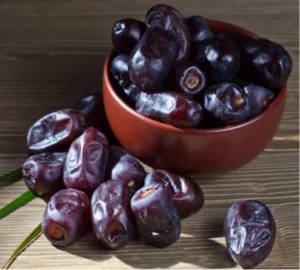
For visual examples of these differences, see what fresh dates look like at different stages of ripeness.
After successful fertilization, the small fruit grows in bunches beneath the palm canopy. Each date gradually changes in size, color, moisture content and texture. The major stages are summarized below; the exact duration depends on the variety and local conditions.
| Stage | Appearance and texture | What is happening |
|---|---|---|
| Hababouk | Very small, newly formed fruit | Early growth immediately after fertilization. |
| Kimri | Green and firm | Rapid fruit growth, with high moisture and developing seed. |
| Khalal (Bisr) | Full-size; often yellow or red; usually firm | Color develops and some varieties become suitable for eating fresh. |
| Rutab | Softer, often amber or brown | Fruit ripens, loses moisture and becomes less astringent. |
| Tamr (Tamar) | Fully ripe; usually darker and less moist | The fruit reaches a later, more shelf-stable ripeness stage. |
These stage names and characteristics are described in the FAO botanical guide to date palms. To see how changes in color and texture affect appearance, read our guide to what fresh dates look like.
Where Do Dates Grow?
Suitable areas usually share a combination of high summer temperatures, access to irrigation water and manageable humidity during ripening. Yet the exact production system differs by region. Some farms depend on irrigation from wells or rivers, while others use modern drip systems to manage water more precisely. Varieties are also selected to match the local growing season and the type of fruit demanded by the market.
When comparing countries, it helps to distinguish between total harvested volume, the number of cultivated palms and export activity. A country may grow a large amount of dates for domestic consumption without being the leading exporter. Annual statistics are more useful than permanent rankings because harvest conditions, production area and reporting methods change over time.
Date palms are cultivated mainly across North Africa, the Middle East and other arid or semi-arid regions with hot growing seasons and irrigation. Important producing countries include Egypt, Saudi Arabia, Iran, Algeria and Iraq. Date cultivation also exists in parts of the United States, including California and Arizona, and in other regions with suitable microclimates.
For country-by-country production figures, rankings should be checked for a specific year rather than treated as permanent. The FAOSTAT crops and livestock production database provides annual country data. For further background, see our article on dates production by country.
When Are Dates Harvested?
Harvest workers may make more than one pass through an orchard because dates on the same palm can mature unevenly. The choice of picking stage also affects sorting, handling and packaging. Softer fruit may require gentler handling than firm fruit to prevent bruising. Producers therefore consider both biological maturity and the requirements of the buyer when deciding when a bunch is ready.
For buyers, a harvest date alone does not tell the full story of product condition. The date variety, stage of ripeness, subsequent sorting and storage arrangements help determine how fruit should be handled. This is particularly important when comparing the appearance of dates sold fresh against varieties packed after reaching a later ripening stage.
Harvest timing depends on the cultivar and on the stage at which the fruit will be sold. Some dates are harvested at the firm Khalal stage, others at the soft Rutab stage, and many commercial dates are collected at Tamr maturity. Growers may harvest entire bunches or pick fruit in several passes when individual dates ripen unevenly.
The annual harvest season differs across regions and varieties. If you want to compare seasonal availability, see our guide to the season of dates.
Different cultivars can reach their preferred harvest stage at different times, so buyers should check the available grade and ripeness.
Kourosh Foods
For wholesale orders, it is useful to specify the desired variety, intended application and target moisture level before comparing offers. Dates destined for retail packs may need different sorting and presentation from fruit intended for processing or ingredient use. Clearly describing the required size, grade, packing format and destination market helps suppliers recommend suitable options.
One named Iranian variety is Sayer, which is commonly discussed alongside other commercial cultivars when buyers compare appearance, texture and applications. Exact specifications and availability should be confirmed for each order rather than inferred from the growing region alone.
When comparing suppliers, confirm whether the requested fruit is offered with pits or pitted, the acceptable size range, and the packaging needed for transportation. These details can matter as much as the country of origin. Commercial specifications should always reflect the final customer and intended use rather than treating all dates as interchangeable.
Kourosh Foods supplies Iranian dates and other agricultural food products for international buyers. Cultivar, ripeness, grading, moisture content and packaging can all affect the final product specification. Buyers looking for named date varieties can explore Sayer dates and the broader product range, then request information about availability and suitable packing options.
Bottom Line
Dates grow on female date palms after pollination with pollen from male palms. Productive cultivation calls for warm conditions, irrigation and good soil drainage. Trees commonly take several years to begin fruiting, and the fruit moves through green, colored, soft and fully ripe stages before harvest. The exact timetable changes with the variety and growing conditions. Dates are food, not a proven cure for digestive disorders or cancer; claims about disease prevention should not be inferred from general nutritional benefits.
Frequently Asked Questions
How do dates grow on palm trees?
Female date palms produce flowering clusters. After pollen from a male palm fertilizes the flowers, small dates form and ripen in hanging bunches over the growing season.
How long does a date palm take to bear fruit?
A planted offshoot or nursery-grown palm may begin flowering and producing fruit around four to five years after establishment, but the timing varies. More substantial crops generally develop as the palm matures.
Can you grow a date palm from a seed?
Yes. A seed can grow into a date palm, but the plant may be male or female and may not match the parent variety. Offshoots or tissue-cultured plants are preferred for predictable commercial fruit production.
Do date palms need hand pollination?
Commercial growers commonly pollinate female flowers by hand or with assisted equipment to improve fruit set. Some natural pollination can occur, but it is less reliable for commercial production.
What climate is best for growing dates?
Long, hot, sunny growing seasons are favorable, especially when weather remains relatively dry during fruit ripening. Regular irrigation is still essential for reliable yields.
What soil is best for date palms?
Deep, well-drained soils are suitable. Sandy loam is common, but effective irrigation, drainage, salinity management and soil nutrient availability matter more than a single soil type or fixed pH.
Where do dates grow?
Date palms grow mainly in North Africa and the Middle East, with cultivation also occurring in other suitable warm regions such as parts of the southwestern United States.
What are the stages of date fruit ripening?
The commonly described stages are Hababouk, Kimri, Khalal, Rutab and Tamr, from newly formed fruit through green growth and coloring to soft and fully ripe dates.