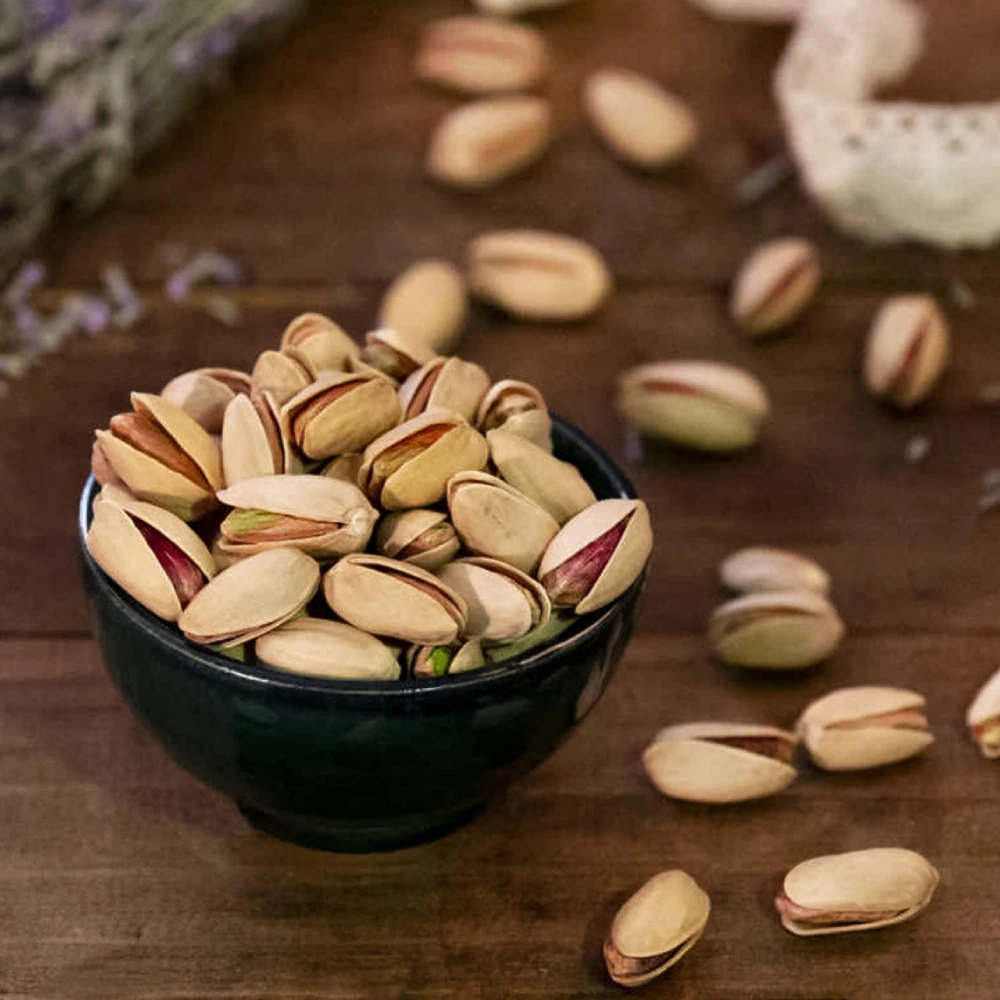
Both American and Iranian pistachios are of high quality: American (largely California) pistachios are much larger, more homogenous, and regulated on aflatoxin and grading, whereas Iranian pistachios are smaller on average but more famous due to their richer taste, higher oil content, and a variety of traditional varieties. In this article, we will explore more details about American vs Iranian pistachios.
Big Picture: American vs Iranian Pistachios
To explore American vs Iranian pistachios, we should know some facts. The United States is now the largest volume pistachio producer in the world, with California Central Valley producing the majority of all world production. Iran comes in the second position with a long production history of pistachios and an excellent export background.
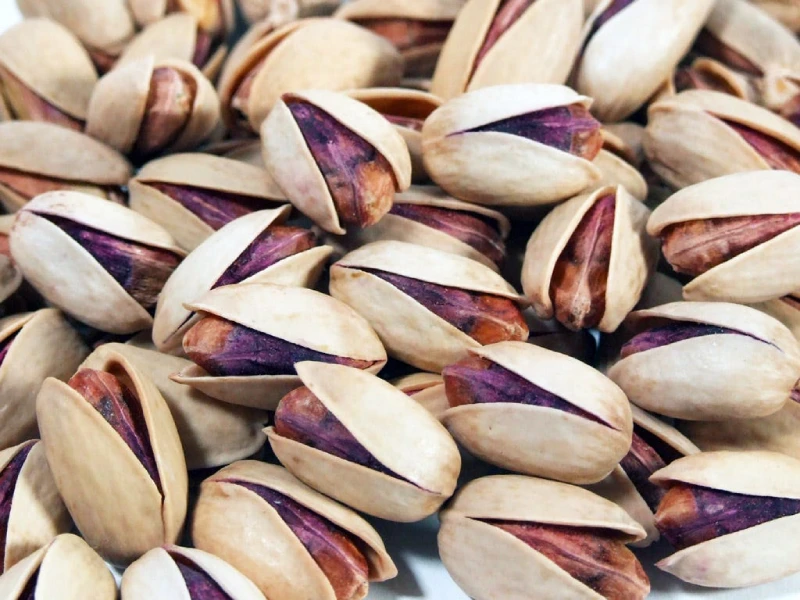
The U. S. pistachios are grown and processed to achieve standard size, machine harvesting, and strict control of food safety, whereas the persian pistachios are focused on traditional cultivars, deep flavor, and flexibility to the type of roasting. The two have been in a close competition in the global trade; although the U.S. usually dominates the total export value, pistachios produced in Iran are still being sold at high prices in most specialty and Middle Eastern markets.
Key Differences at a Glance
You can explore the American vs Iranian pistachios features in this table:
| Aspect | American pistachios | Iranian pistachios |
| Main origin | California, Arizona, New Mexico | Kerman and other provinces in Iran |
| Size & shape | Generally larger, more uniform, mostly one commercial type in export channels | Mix of long and round varieties (Akbari, Kalleh Ghouchi, Fandoghi, etc.) with more visual diversity |
| Flavor | Mild, slightly sweet, clean taste; designed for the broad global snacking market | Richer, more intense, often described as buttery and complex in aroma and taste. |
| Oil content | Slightly lower on average; supports longer shelf life and milder flavor | Often higher unsaturated oil content, linked to stronger flavor and high‑temperature roasting |
| Roasting style | Frequently medium roasted and often lightly salted or flavored for retail packs | Traditionally roasted at higher temperatures, which intensifies flavor and helps reduce microbial load. |
| Aflatoxin controls | Federal Marketing Order, strict testing; domestic limit about 15–20 µg/kg; mandatory certification for handlers | History of aflatoxin issues in some shipments; monitoring has improved, but exports to the EU are still monitored closely and sometimes face rejections |
| Price & positioning | Large, stable volumes, competitive wholesale prices; strong presence in North America and Europe | Wide price range: from competitive bulk Fandoghi to premium Akbari and Kalleh Ghouchi at higher prices per ton |
Varieties and Sources of Pistachios
Most American vs Iranian pistachios are grown using a smaller number of commercial cultivars, which have been adapted to the climate in California and which are mechanized; to consumers, this translates into a high consistency in shell opening, a uniform kernel size, and roasting behavior.
Read More: types of pistachios
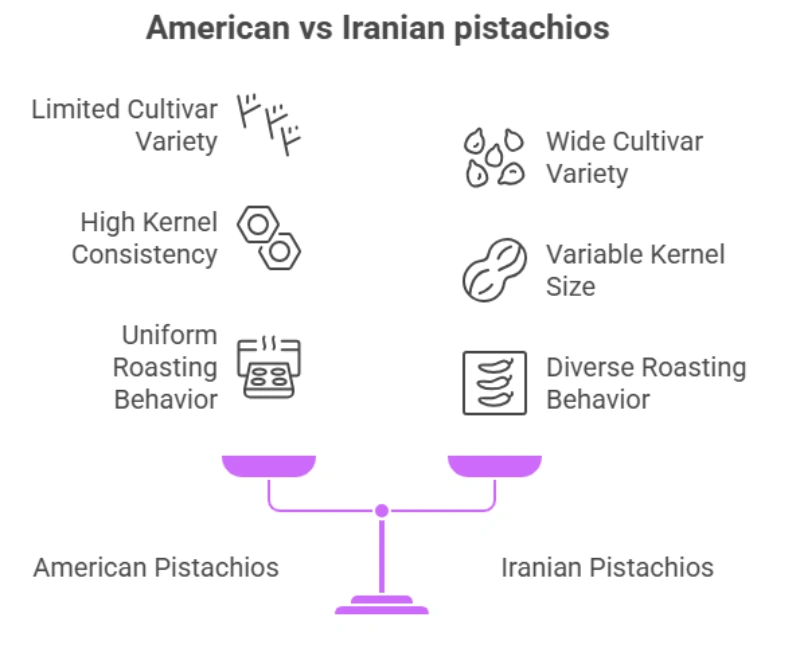
Iran, on the other hand, sells wide commercial varieties:
- Fandoghi: A round, small nut that is commonly used in large quantities of production, imports, and food processing.
- Akbari: This is a long and fine pistachio nut of high kernel-to-shell ratio, and is a luxurious type of snack.
- Kalleh Ghouchi: Huge and round type, with considerable kernel size and high taste, commonly considered one of the premium types.
Shell Opening, Kernel Size, and Grading
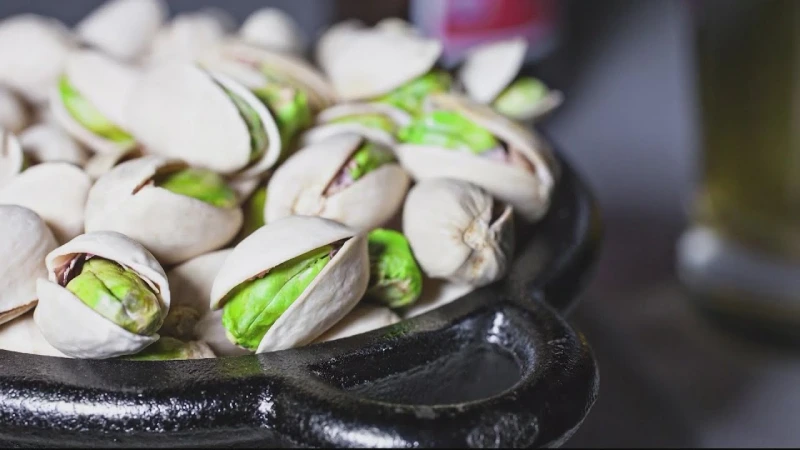
To know more about American vs Iranian pistachios, we should know that California industry standards stress a high proportion of naturally open shells, uniform kernel size, and low defect rates with machine sorting and federal standards of quality. Consequently, the American pistachios appearing on the shelves of supermarkets are homogeneous in terms of their shell opening and color.
Read More: best pistachio in the world
Natural shell opening is also quite high in Iranian pistachios, especially in the high-quality varieties such as Akbari and Kalleh Ghouchi, but lots of them have increased variation in size and color due to a variety of orchards and cultivars. In Iran, grading is usually based on size (nuts per ounce), variety, shell opening, and colour of the kernel; large, long nuts and dark green nuts command higher prices, particularly to Europe and East Asia.
Aflatoxin, food safety, and bans
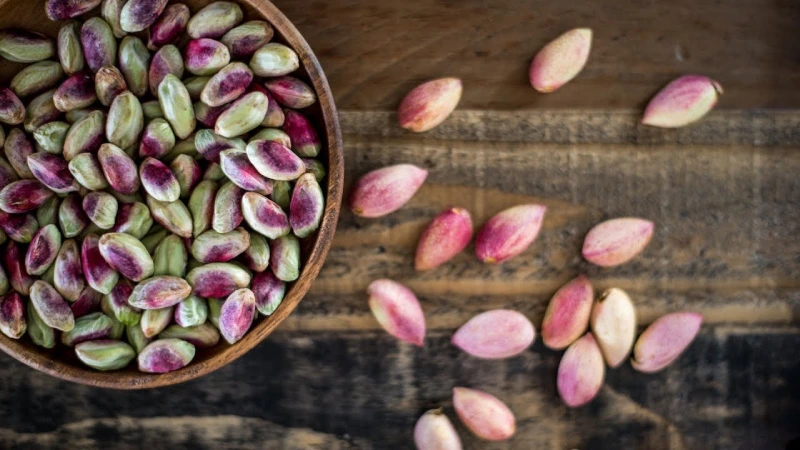
Aflatoxin is a natural toxin of some molds that may occur in nuts; American and Iranian pistachios should be at the maximum level prescribed by import controls in countries importing. The U.S. pistachio industry has a Federal Marketing Order, which involves testing and certification and includes a 15 to 20 µg/kg limit of aflatoxin and structured monitoring programs.
Kourosh Foods and sourcing focus
After understanding the features of American vs Iranian pistachios, if you want to buy high quality Iranian pistachios, Kourosh Foods is the best place. We consider flavor, consistency, certifications, and the perception of consumers in providing our products. Contact us now to place your order.
FAQs
- What is the difference between American and Iranian pistachios?
American pistachios are larger and more standardized with very strict safety controls, while Iranian pistachios are more diverse in varieties and generally have a richer flavor.
- Are Iranian pistachios healthier than American pistachios?
Both are nutritionally similar; Iranian nuts have slightly higher oil content and stronger flavor, but health differences mainly depend on roasting style and added salt, not origin. - Why do Iranian pistachios taste richer?
Their cultivars, higher unsaturated oil content, climate, and use of higher‑temperature roasting contribute to a deeper and more buttery nut flavor. - Are American pistachios larger than Iranian pistachios?
On average, yes: U.S. pistachios are bigger and more uniform, although Iranian varieties like Kalleh Ghouchi and Akbari can be very large as premium grades. - Do Iranian pistachios have more oil content?
Trade and technical sources often report higher unsaturated oil content in Iranian pistachios, which is linked to their stronger flavor and roasting behavior. - Which pistachios are better for roasting?
Iranian pistachios handle higher‑temperature roasting very well for intense flavor, while American pistachios work best for medium roasts and flavored coatings. - Are Iranian pistachios banned in some countries due to aflatoxin?
They are not universally banned, but some shipments have faced rejections or stricter checks in markets like the EU when aflatoxin levels exceeded local limits. - Which country produces better‑quality pistachios?
Quality exists in both origins; the U.S. leads in standardized, tightly controlled quality, while Iran leads in flavor complexity and variety, so “better” depends on the buyer’s priority. - Do American pistachios have less flavor than Iranian pistachios?
American pistachios are usually milder and slightly sweeter, while Iranian pistachios are widely described in trade as more intense and aromatic. - Which pistachios are more expensive?
Premium Iranian varieties like Akbari and Kalleh Ghouchi can be more expensive per kilogram than bulk American pistachios.