Sunflower seeds are popular bite in the whole world – buttery, nutty and rich with nutrients. You may have asked yourself how long do sunflower seeds last after opening? The answer may vary according to whether you are going to roast them or have them raw, shelled, or unshelled. This question depends on a number of factors such as storage temperature, air exposure and the state of the seeds whether they are raw or roasted. In this article, we will go through all the details about sunflower seeds shelf life.
Understanding the Basics of Sunflower Seed Shelf Life
Similar to any other seed and nuts, sunflower seeds have natural oils. These are healthy oils that are very sensitive to oxygen, light, and heat. The oils begin to oxidize with time, particularly once the package is opened, and the oxidation process causes rancidity and stale or bitter taste.
Read More: sunflower seeds health benefits
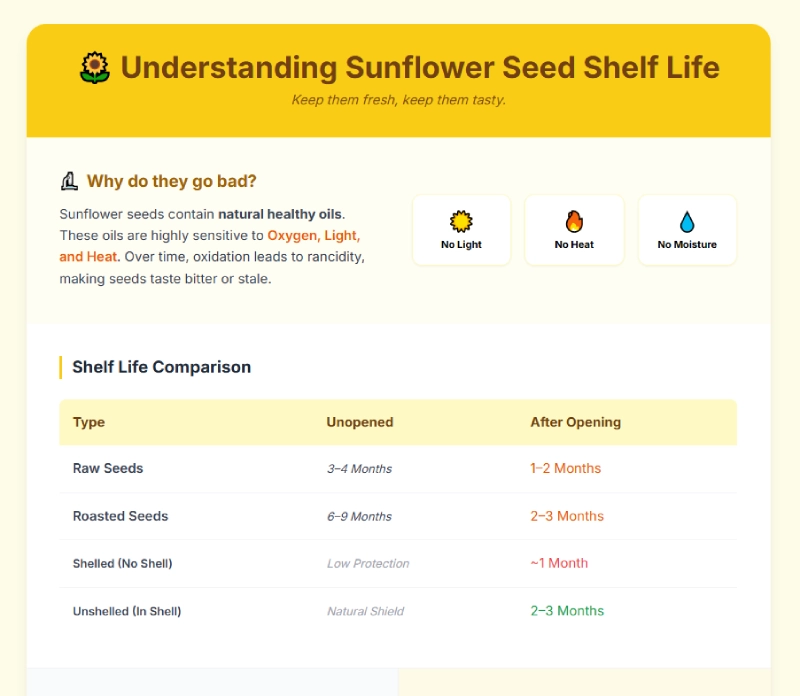
Sunflower seeds shelf life generally varies by type:
| Type | Unopened shelf life | After opening |
| Raw sunflower seeds | 3–4 months at room temperature | 1–2 months |
| Roasted sunflower seeds | 6–9 months unopened | 2–3 months |
| Shelled (no shell) | Shorter due to exposure | About 1 month once opened |
| Unshelled (in shell) | Longer protection | 2–3 months opened |
These ranges assume your sunflower seeds are stored properly, away from sunlight, heat, and moisture.
Raw vs. Roasted: Which Lasts Longer?
Sunflower seed expiration can be different if they are raw or roasted. Unsaturated fats are more reactive to air and therefore use up the raw sunflower seeds more easily. The enzymes present in the seeds are not roasted and therefore remain active without spoilage, particularly when the temperatures are hot.
On one hand, roasted sunflower seeds have a slightly longer shelf life since the process of roasting the seeds dries them and stabilizes the oils temporarily. Nonetheless, their crispiness and taste may soon disappear when they are in a moist environment or when they are in the sun.
Read More: sunflower seeds benefits for skin
Here’s a simple takeaway:
- Raw seeds = higher amounts of nutrients, lower lifespan.
- Roasted sunflower seeds shelf life= more stable, but perishable.
Shelled vs. Unshelled Seeds
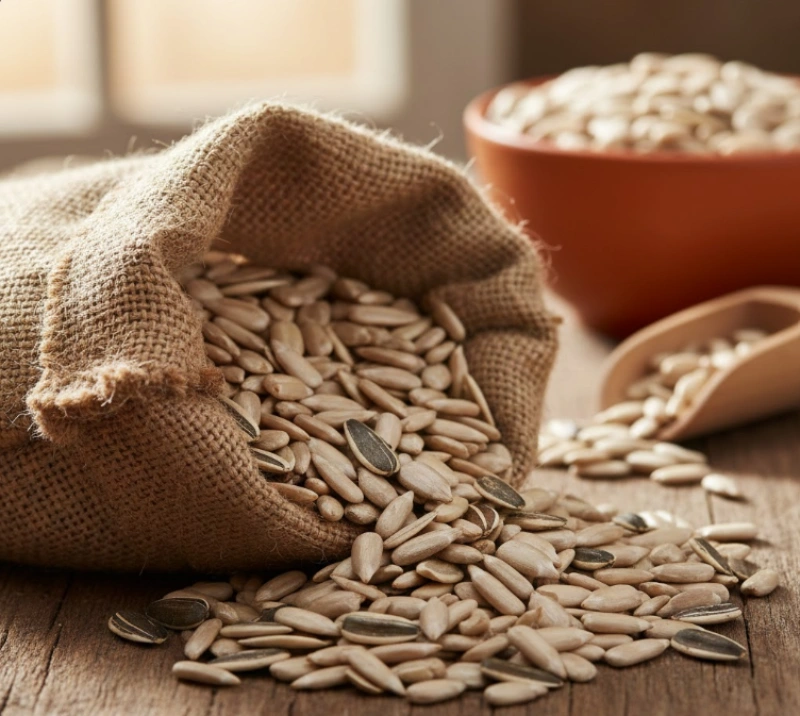
The shell serves as a natural shield. The inner kernel of the sunflower seeds is not exposed to oxygen and light when it is enclosed in the outer husks. What this implies is that unshelled seeds take longer to become dormant than shelled seeds, which are in direct contact with oil.
If you frequently purchase shelled sunflower seeds, buy them in an airtight jar or a bag with minimal air. They may also be kept crisp in a small silica gel pack to soak up the excess moisture.
Understanding “Expiration Date” vs. “Best Before” Date
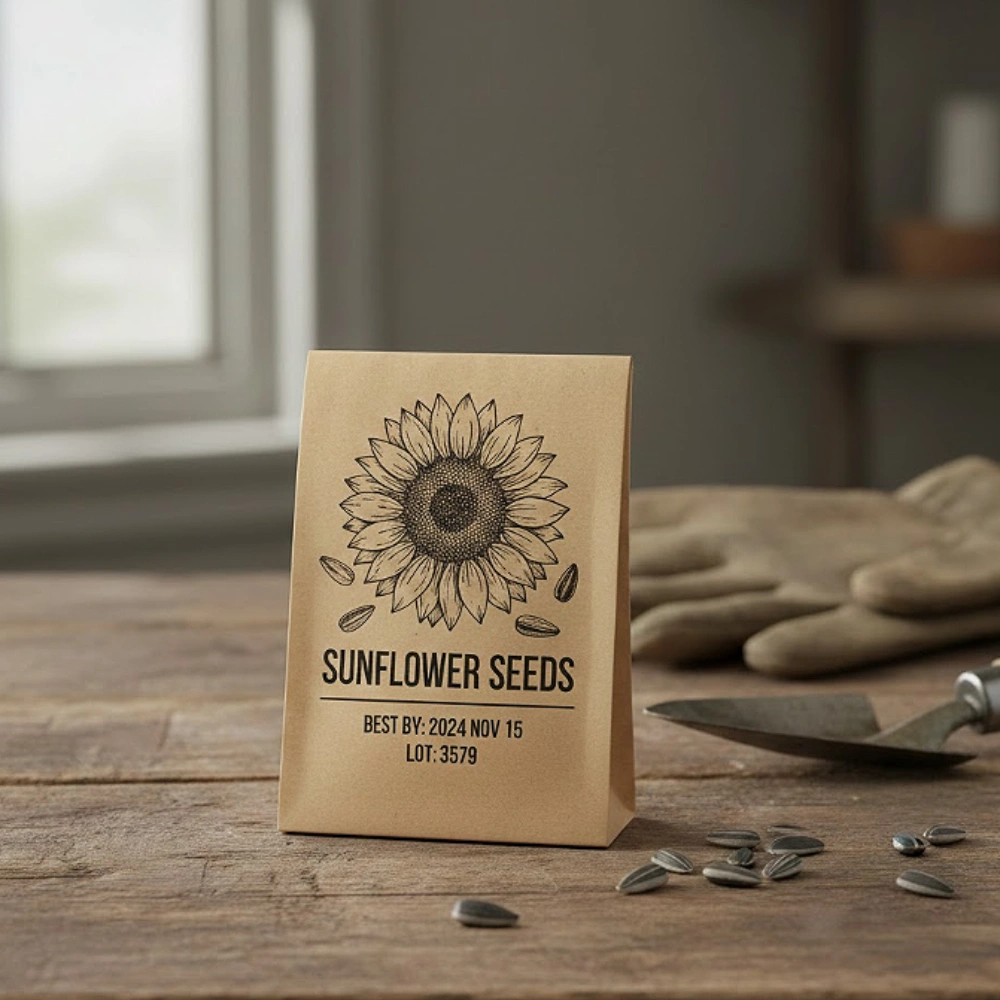
Consumers are very misleading about dates on packaging. The best before date is often used to define quality, rather than safety. The latter implies that beyond this date, the product might lose some of its flavor, aroma, or crunch, but is not necessarily unhealthy to consume it right away.
Sunflower seed expiration shows when the product can cease to be safe because of possible rancidity or microbial contamination. In the case of sunflower seeds, rancidity is predominant over bacterial contamination, because of the low moisture content, bacteria do not proliferate.
Then, assuming your bag indicates the date before March 2026, it should be safe to eat it a couple of weeks after that date, if it appears and smells like usual, and was stored in good conditions.
Storing Sunflower Seeds: Room Temperature vs. Refrigerator
There’s a big difference between leaving seeds on your kitchen counter and keeping them in an airtight jar in the fridge. Here’s a brief comparison of sunflower seeds shelf life:
| Storage location | Approximate shelf life after opening | Notes |
| Room temperature | 1–3 months | Keep away from sunlight and humidity |
| Refrigerator | 6–12 months | Best for shelled or roasted seeds |
| Freezer | Up to 1 year | Maintain crunch and flavor well |
When refrigerating, ensure seeds are in a tight, moisture-proof container. Avoid thin plastic bags that can trap humidity or absorb odors from other foods like onions or cheese.
Signs Your Sunflower Seeds Have Gone Bad
To know sunflower seeds shelf life, remember that natural oils do not last long, regardless of good storage. To know whether the sunflower seeds have expired, here are some signs:
- Smell: Sour, painty, or musty smell.
- Taste: Metallic, bitter, or stale taste.
- Appearance: Discolouration, shrivelling, or oiliness.
- Mold: Spores are visible or have a white coating.
Food safety experts and suppliers of sunflower seeds point out that when the seeds smell or taste bad, then it is not worth taking the risk. Spoiled oils might be very uncomfortable in the stomach and could have dangerous oxidation products.
Tips from Suppliers and Experienced Consumers
There is an important point as observed by many sunflower seed suppliers and long time consumers, since sunflower seeds contain a lot of oil, they go rancid quickly. Even the quality of the roasted seeds may spoil in a few weeks in a damp climate or a hot kitchen. Here are some tips:
- Transfer open seeds to a vacuum-sealed glass jar.
- Keep them in the refrigerator when you will not be able to finish them as fast.
- Do not expose to direct sunlight, light accelerates oxidation.
- There are even experienced eaters who advise refrigerating some of the seeds as soon as the bag is opened, and more so, bulk purchases.
Can You Still Eat Expired Sunflower Seeds?
When the seeds appear good, smell good, and feel normal, they should be consumed within a short time of the date. However, when oxidation begins, the fats are disintegrated to produce irritants that may lead to stomach upsets. Nutritionally, the rancid seeds are also losing antioxidants such as vitamin E, making them less healthy.

Kourosh Foods, the Supplier of Sunflower Seeds
Kourosh Foods, as a sunflower seeds supplier, focuses on delivering Roasted sunflower seeds in different flavors that are processed and packed under food‑safety regulations, which helps preserve freshness up to and sometimes beyond the stated best before date when customers store them correctly. Contact us now to place your order.
FAQ
- How long do sunflower seeds last after opening?
With good storage in an airtight container, opened sunflower seeds often keep their best quality for a few months at room temperature and up to about a year in the refrigerator or freezer. - What is the shelf life of roasted sunflower seeds?
Roasted sunflower seeds usually keep for roughly 3–5 months at room temperature, and up to about 12 months in cool, airtight storage such as the fridge or freezer. - Do sunflower seeds expire or go bad?
Yes, sunflower seeds can go rancid or grow mold when exposed to air, heat, and moisture for too long, even if the printed best before date has not yet passed. - How can you tell if sunflower seeds have gone bad?
If the seeds smell sharp or paint‑like, taste bitter or soapy, or show visible mold or abnormal discoloration, they should be considered spoiled and discarded.